More about HKUST


Achievements
Community
Corporate Projects
Exchange
Field Trips & Visits
Internship & Career
Undergraduate
Office
Research
Seminars & forums
Student Activities
T&M-DDP
Postgraduate
EVMT
Innovation
Entrepreneurship
Sustainability
Engineering
Environment
Air Quality
GBA
PublicPolicy
ENVR
PPOL
Teaching&Learning
Technology
Research and Technology
Greater Bay Area
IIM
Fintech
Alumni
AMC
Art Management
Artificial Intelligence
Arts
ArtTech
Cultural Studies
DesignTech
Emerging Interdisciplinary Areas
EMIA
Extended Majors
Faculty
HealthTech
IDT
ISD
Machine Creativity
MarineTech
MPM
MPP
SustainableTech
TIE
TLE
Teaching and Learning
The ISD-led Competition Signals New Ambitions in AI-Empowered Textile Fashion
09/07/2026
What happens when generative AI meets a campus’s "wild boar"? The Hong Kong University of Science and Technology (HKUST) has delivered a resounding answer through its first-ever IP fashion design competition. Amid the global wave of accelerating informatization and digital transformation in traditional industries, the textile and apparel sector —a pillar industry worldwide—is urgently calling for technological infusion to revitalize itself. This institution, renowned for its engineering and technological expertise, is raising its "hammer of technology" not only to transcend the boundaries of artificial intelligence and fashion design, but also to chisel through the walls between laboratory research and industrial reality, paving a new path for the intelligent transformation of the traditional textile industry.
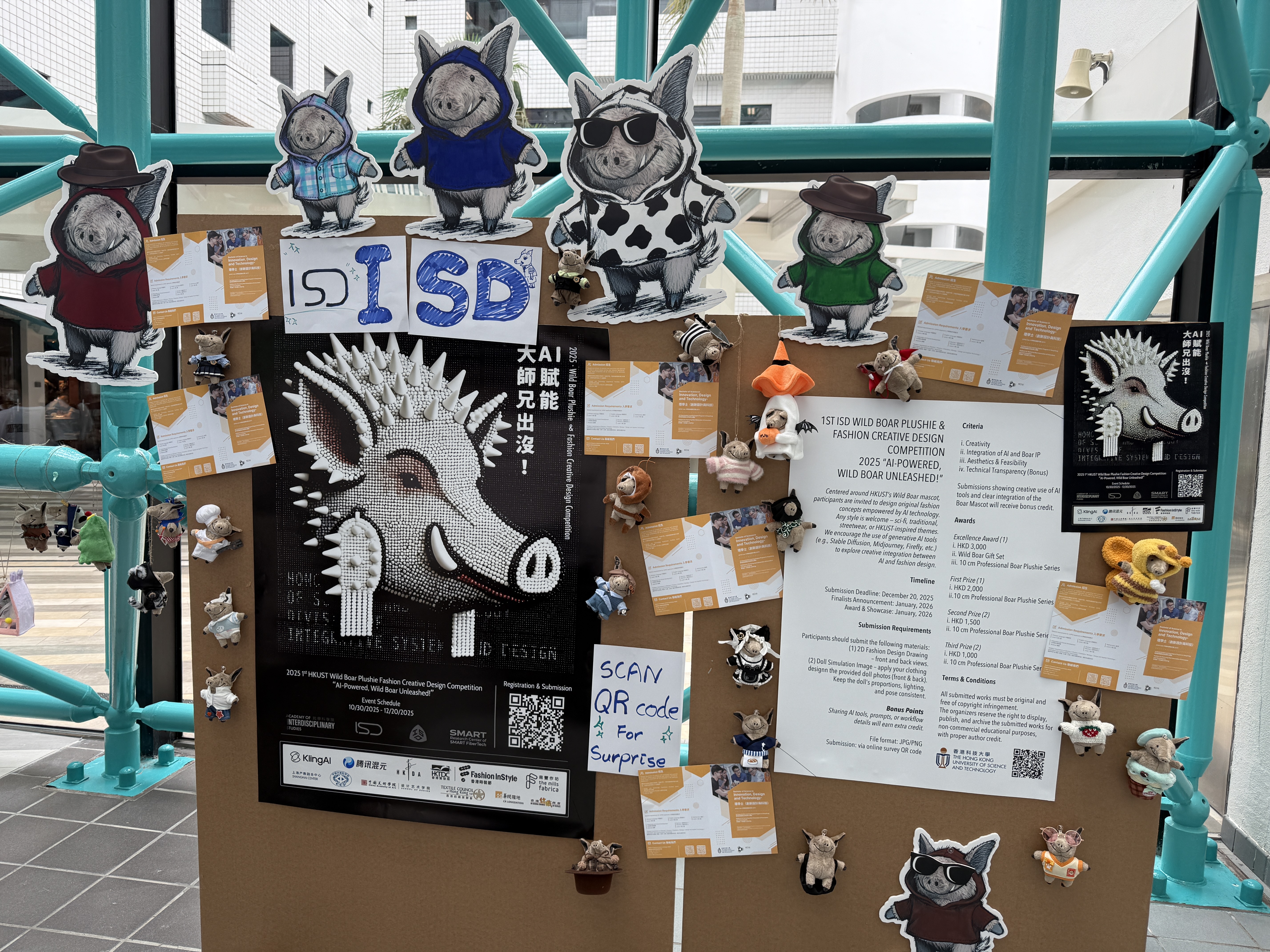
Recently, HKUST’s 1st ISD Wild Boar Plushie & Fashion Creative Design Competition concluded successfully. Under the theme "AI-Powered, Wild Boar Unleashed!", the competition received hundreds of original student submissions, generating an enthusiastic response. Participants were required to utilize generative AI tools to conceptualize original IP characters and fashion designs for the "wild boar", a distinctive campus cultural symbol that frequently roams the University's Clear Water Bay campus. The final works showcased a diverse range of styles, from futuristic sci-fi and avant-garde streetwear to contemporary interpretations of traditional aesthetics and iconic HKUST elements, all demonstrating a vibrant interplay between technological tools and creative inspiration, and fully revealing HKUST students’ keen sensibilities and practical capabilities in the realm of intelligent creativity.
The competition was hosted by the Division of Integrative Systems and Design (ISD) under the Academy of Interdisciplinary Studies, marking another major milestone in HKUST’s push into smart fashion, following the signing of a Memorandum of Understanding (MOU) with Crystal International Group Limited. Notably, the industry has long advocated for building Hong Kong into an "Asian fashion and textile hub," and this competition serves as HKUST’s powerful technological response to these calls, a concrete practice of driving "new quality productive forces" through industry-education integration.
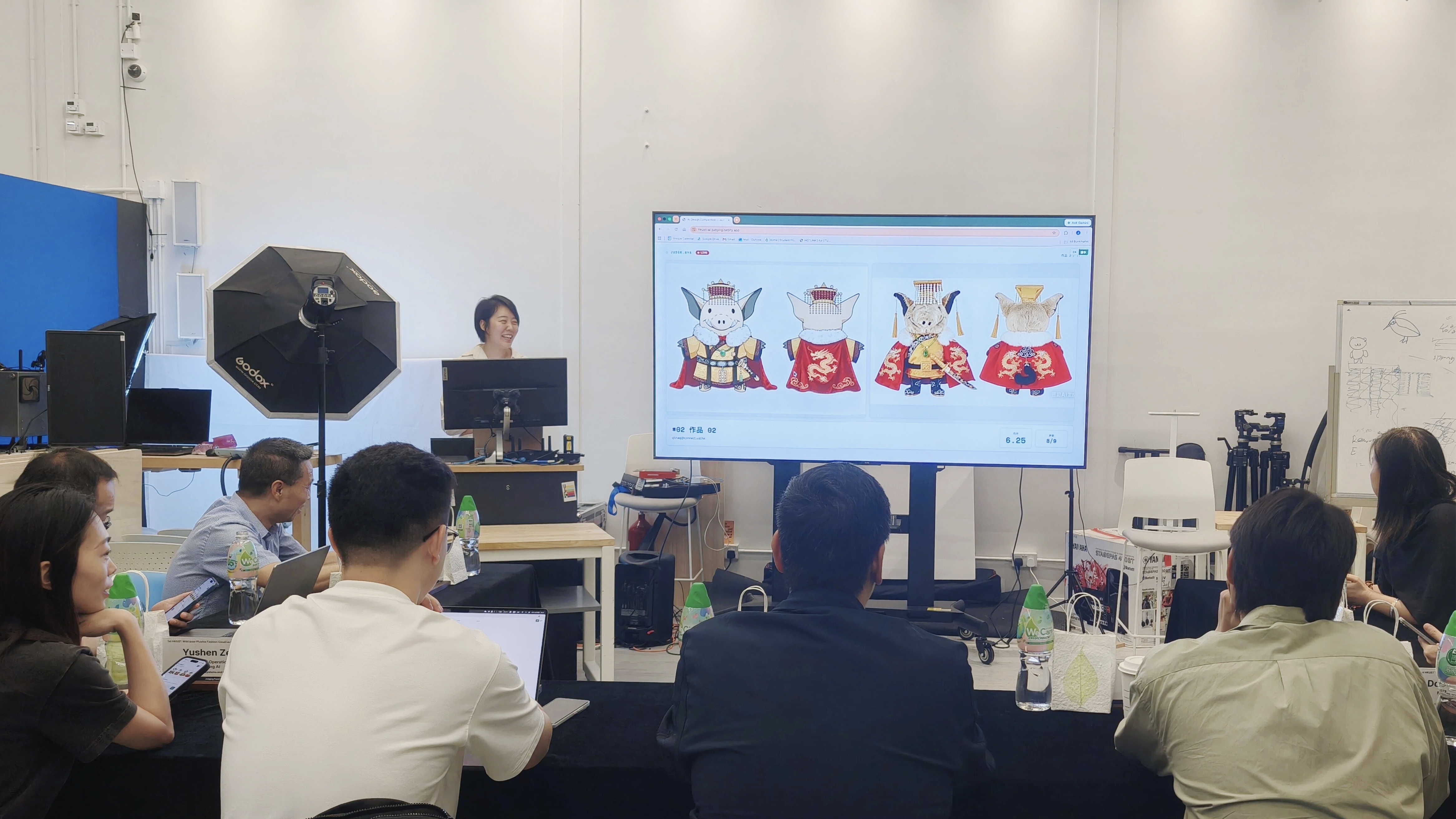
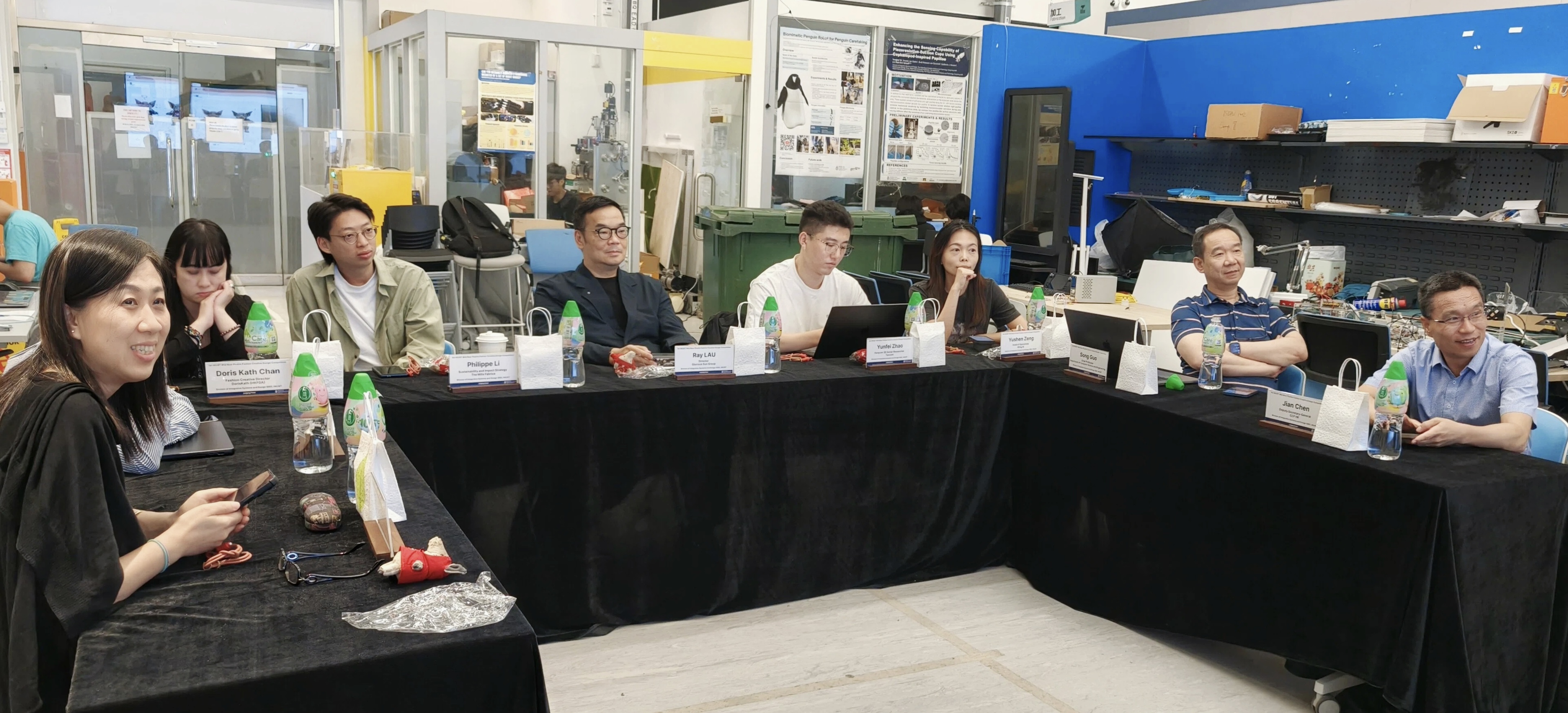
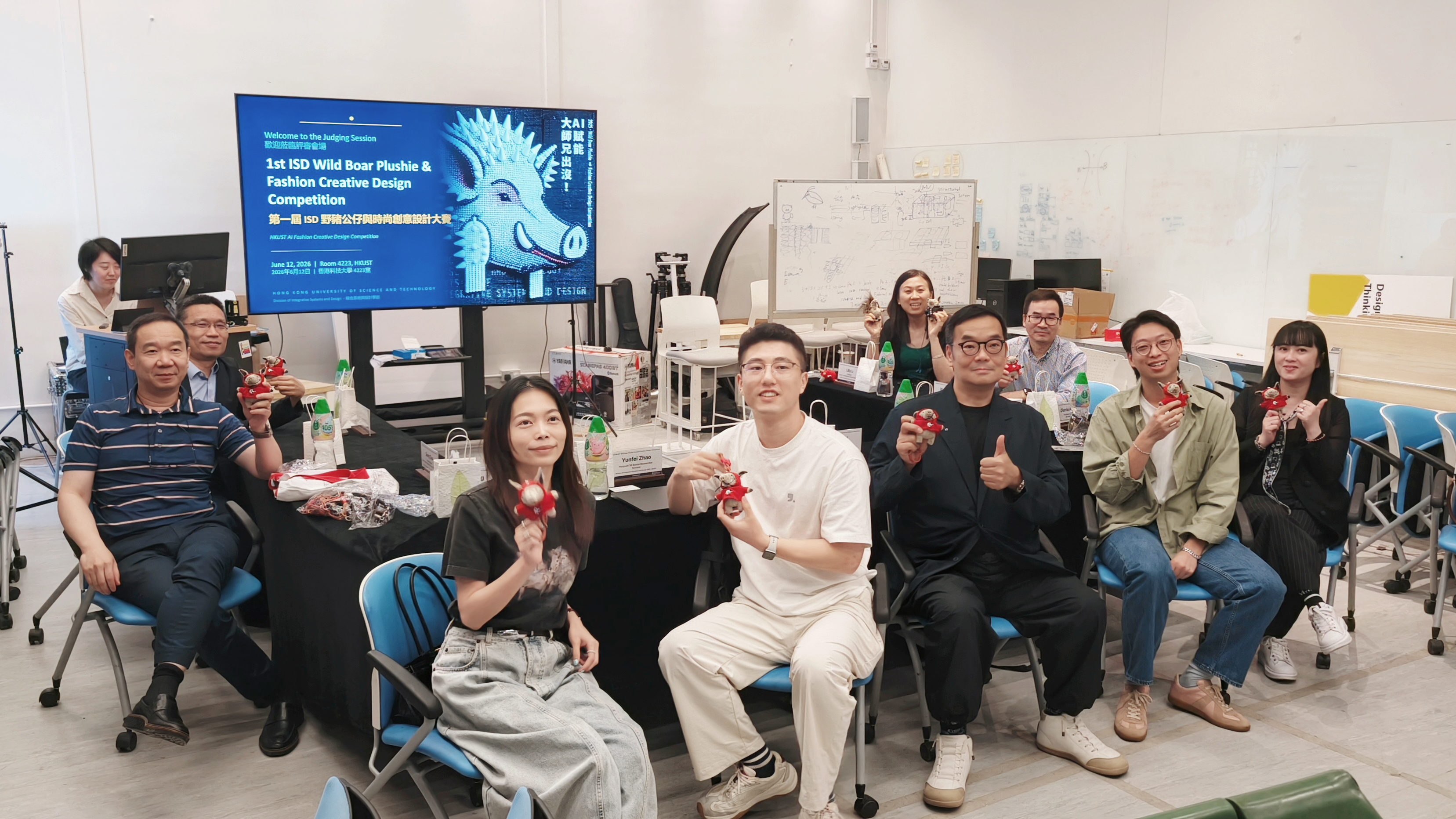
The finalist works were rigorously evaluated by a cross-disciplinary judging panel. The panel comprised members from organizations including Tencent Hunyuan, Kling AI, Glorious Sun Group, The Mills Fabrica, Hong Kong Fashion Designers Association, Hong Kong Trade Development Council, and China Computer Federation Hong Kong, alongside multiple scholars from HKUST's Division of Integrative Systems and Design, Department of Computer Science and Engineering, and Division of Arts and Machine Creativity. This lineup brought both academic depth and industry vision to the table. The judging criteria encompassed creativity, aesthetic presentation, implementation feasibility, AI integration, and technical transparency, with participants encouraged to detail their AI tool usage and creative workflows. The standout works ultimately received the Excellence Award as well as First, Second, and Third Prizes. The winning entry of the Excellence Award skillfully blended Hong Kong’s urban landscape elements with traditional garment silhouettes, leveraging AI tools to achieve an efficient transformation from conceptualization to visual presentation—a model case of deep integration between technology and creativity.
"When artificial intelligence meets creativity, our students are breaking traditional boundaries and redefining how technology can ignite fashion imagination," stated Prof. Lilly LI who led the organizing committee. "This is not merely a celebration of digital creativity, but a practical platform connecting cutting-edge technology with industrial reality. Through these efforts, we are injecting new intelligent momentum into the textile industry, accelerating the translation of research innovations into real-world applications."
From chips to fashion, from algorithms to fabrics, HKUST is using its "hammer of technology" to dismantle the walls between industry, academia, and research. Looking ahead, these cross-disciplinary efforts will continue to foster strategic collaborations with leading enterprises and expand the innovative application boundaries of AI in textiles, apparel, and smart manufacturing—helping traditional industries advance toward a new stage of high-end, intelligent, and sustainable development.
This competition has injected a fresh wave of vibrant and determined energy into the smart fashion landscape of Hong Kong and the wider region.