More about HKUST


Achievements
Community
Corporate Projects
Exchange
Field Trips & Visits
Internship & Career
Undergraduate
Office
Research
Seminars & forums
Student Activities
T&M-DDP
Postgraduate
EVMT
Innovation
Entrepreneurship
Sustainability
Engineering
Environment
Air Quality
GBA
PublicPolicy
ENVR
PPOL
Teaching&Learning
Technology
Research and Technology
Greater Bay Area
IIM
Fintech
Alumni
AMC
Art Management
Artificial Intelligence
Arts
ArtTech
Cultural Studies
DesignTech
Emerging Interdisciplinary Areas
EMIA
Extended Majors
Faculty
HealthTech
IDT
ISD
Machine Creativity
MarineTech
MPM
MPP
SustainableTech
TIE
TLE
Announcements & Office
Meet Our Faculty: Prof. Kosmas GIANNOUTAKIS
06/07/2026
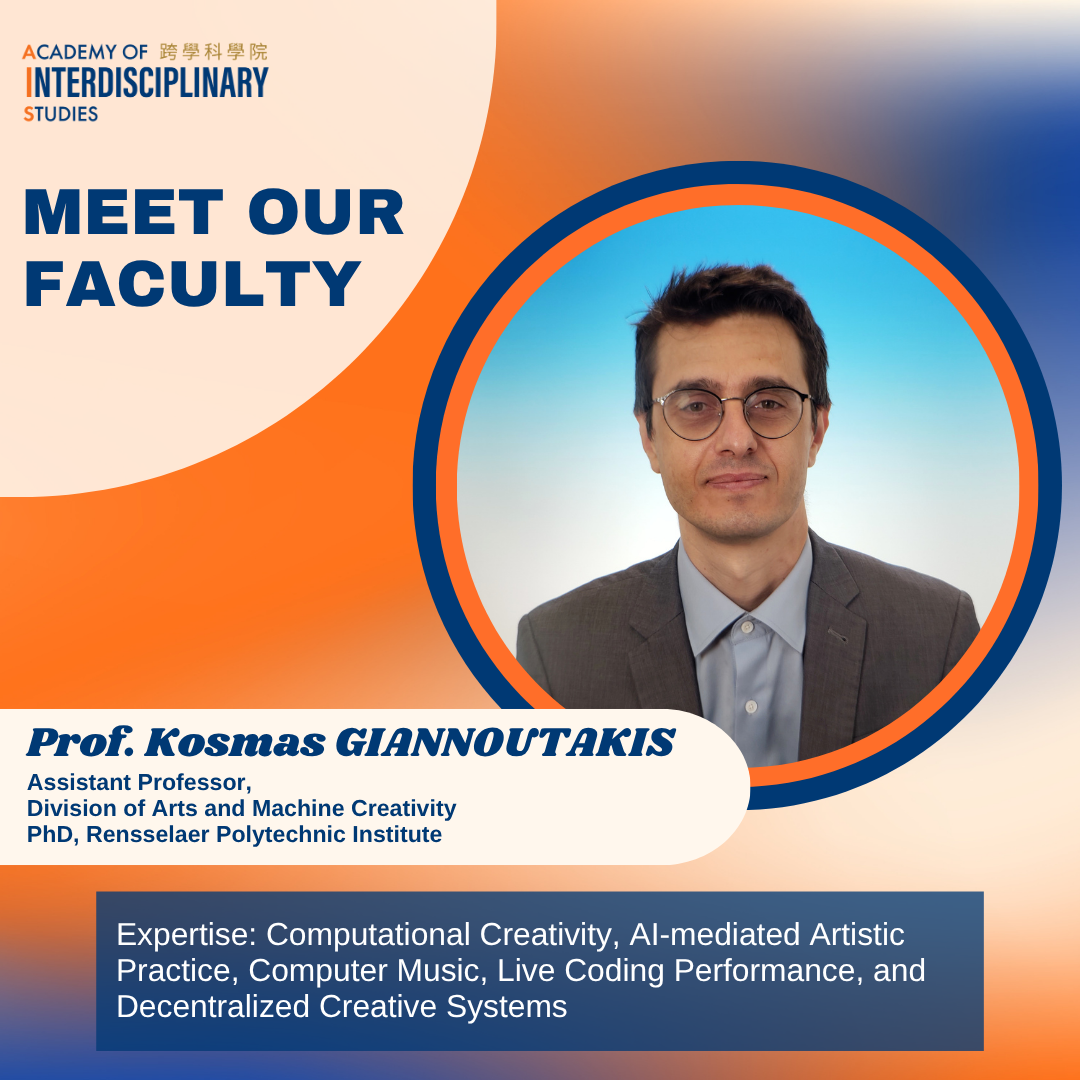
Welcome Prof. Kosmas GIANNOUTAKIS, who has recently joined the Division of Arts and Machine Creativity (AMC) as an Assistant Professor.
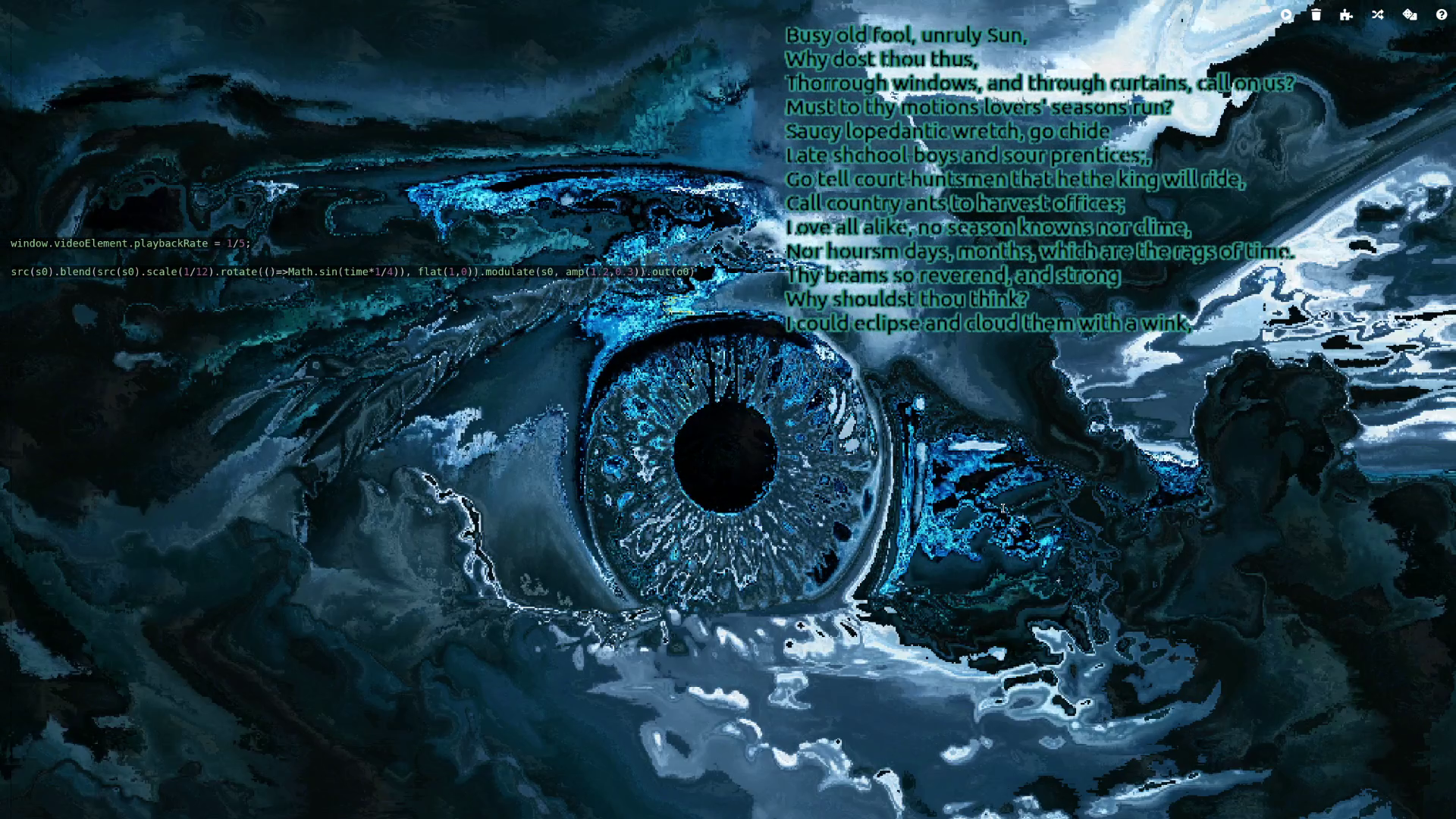
Working at the intersection of creative practice and advanced technologies, Prof. Giannoutakis explores how emerging computational tools—particularly in sound, artificial intelligence, and algorithmic systems—are reshaping contemporary artistic expression. His interdisciplinary work spans both traditional and non-traditional outputs, drawing on various fields such as computer music, media art, philosophy of technology, and critical theory, to examine how artists engage with AI systems.
Read on to learn more about his research journey, perspectives on technology and creativity, advice for students, and how he reconnects with the sea outside of his work.
-----
Could you tell us more about you?
I am originally from Greece, but over the years I have studied, lived, and worked in several countries, including Germany, Austria, the United States, and Ireland. I joined HKUST because it is rapidly establishing itself as a dynamic and innovative leader in contemporary research. HKUST offers a unique opportunity to work across disciplinary boundaries and engage with scientists, artists, and technologists whose perspectives closely match my own research interests.
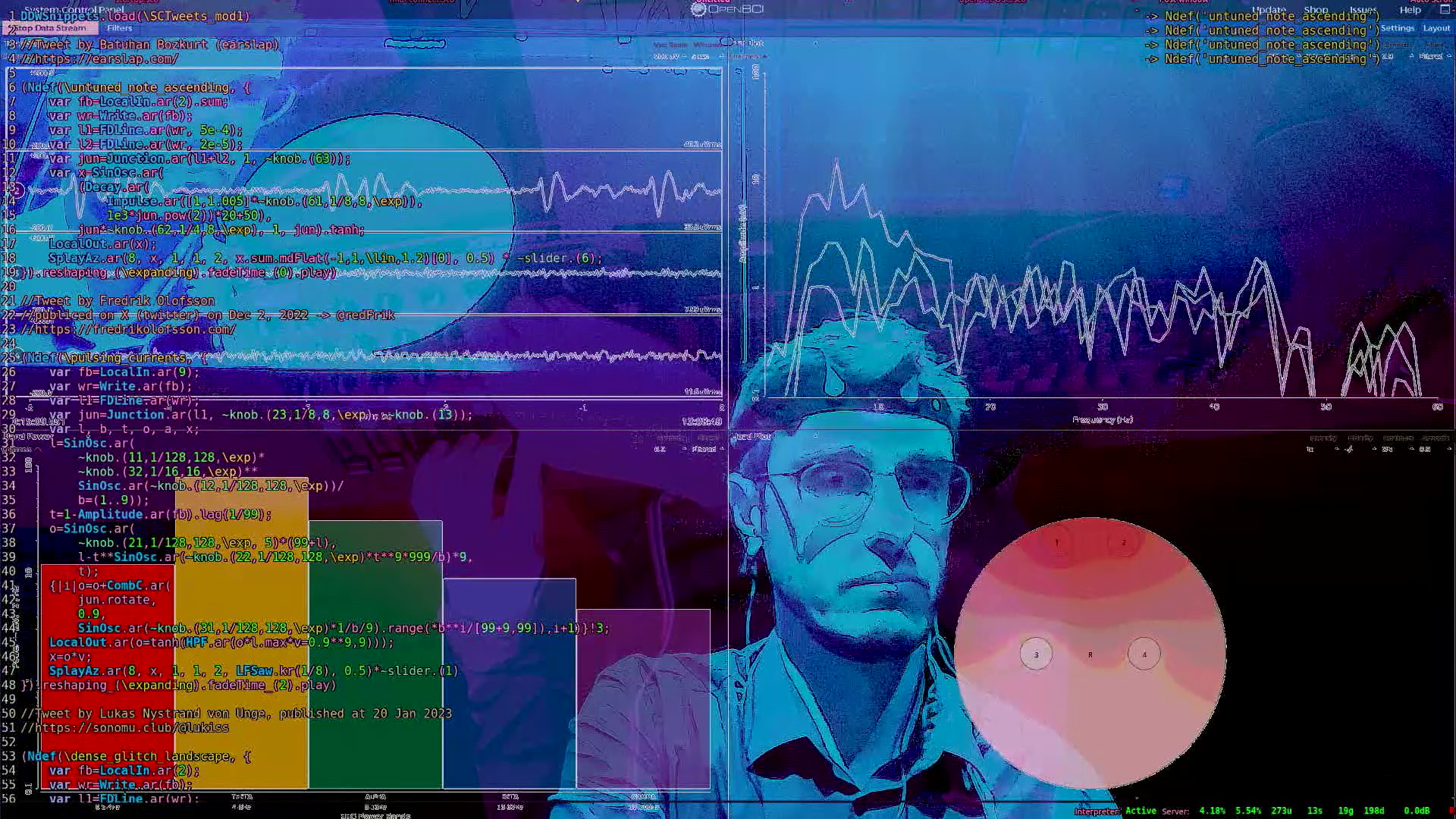
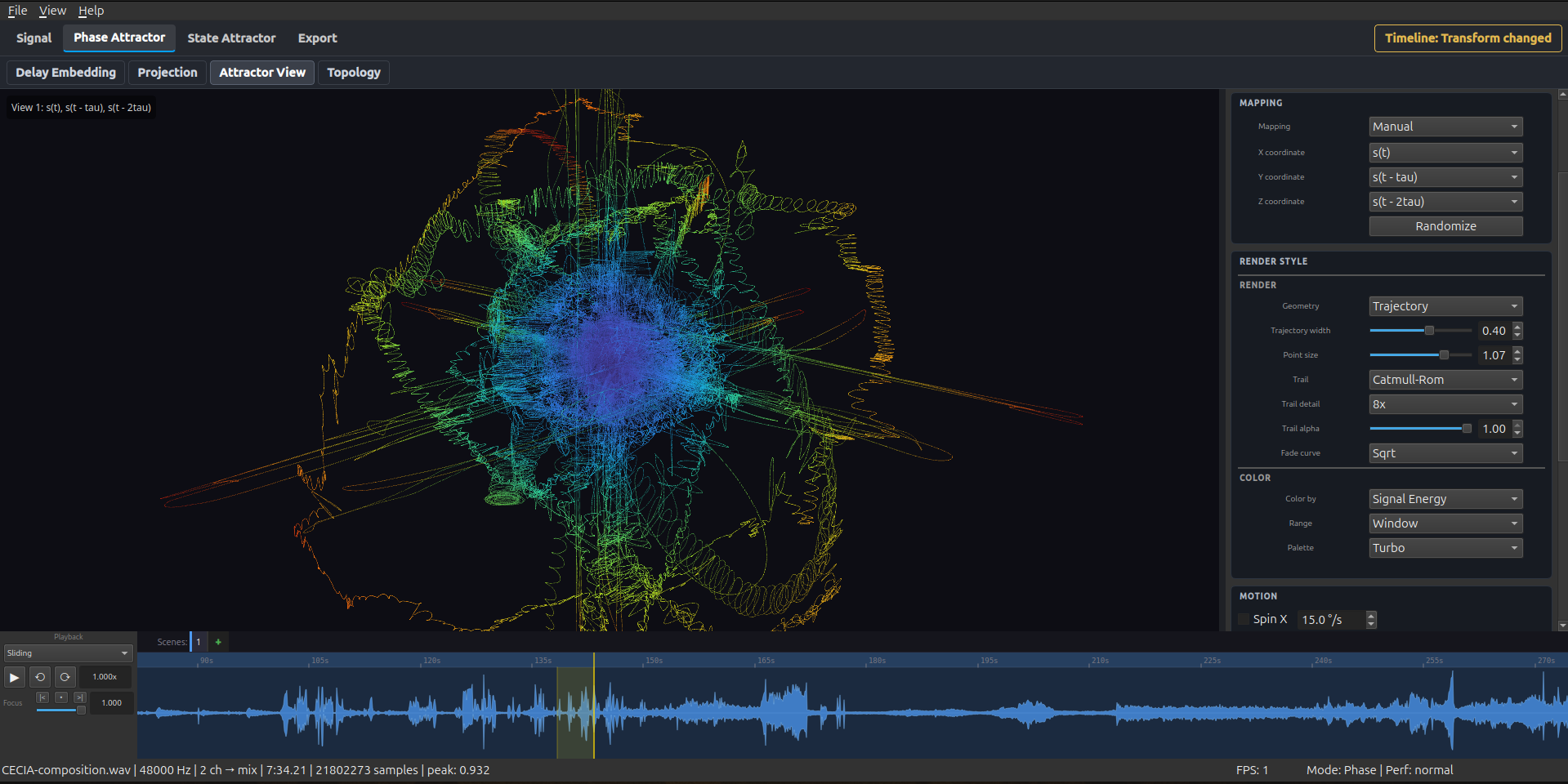
Currently, I am developing a software tool that analyzes and visualizes sound in higher dimensions, enabling researchers to intuitively explore hidden geometric and topological structures in sonic data. In the upcoming Fall Term, I will teach Critical AI and Creative Practice. The course introduces artificial intelligence as an emerging creative medium with its own affordances, limitations, aesthetics, interfaces, and cultural logics, while encouraging students to critically engage with its role in contemporary artistic practice.
What inspired you to specialize in this line of research?
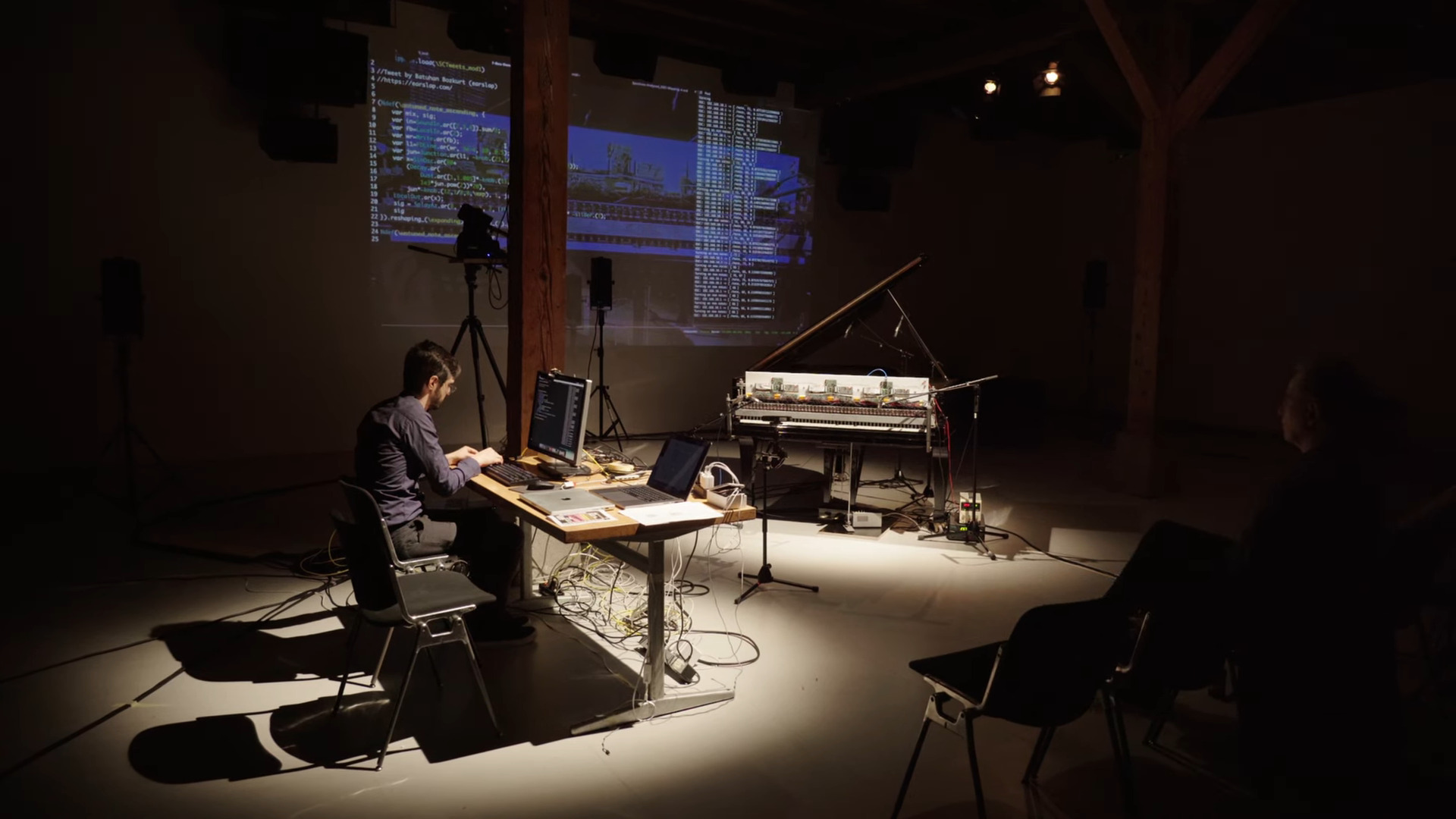
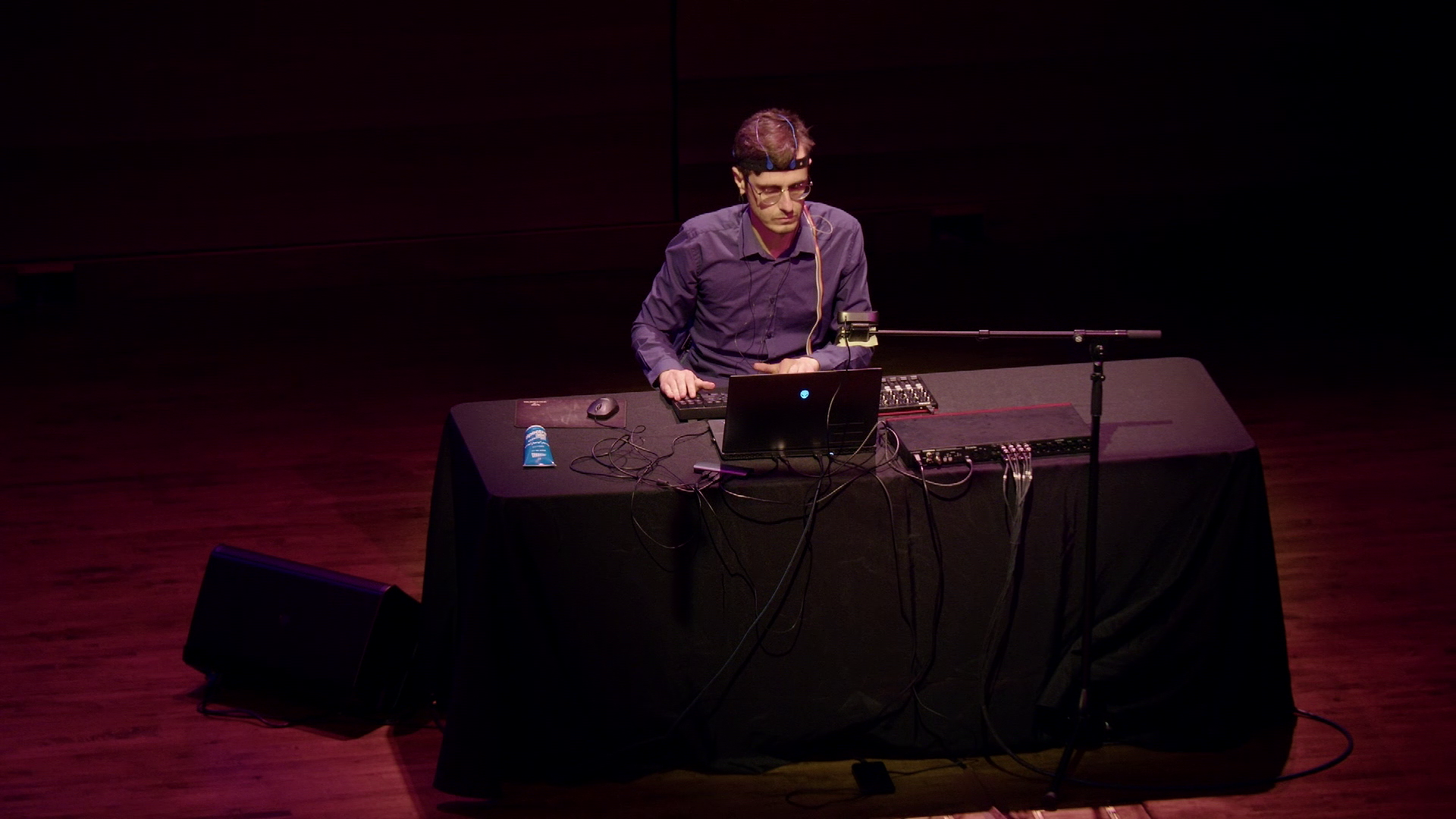
My research interests evolved over a long period of time through my engagement with various artistic and technological practices. From a young age, I was trained as a classical pianist and composer, while also maintaining a strong fascination with digital technology, computation and philosophy. During my studies, I had the opportunity to participate in communities engaged in computer music research. This gradually led me to incorporate computer algorithms, digital interfaces, and robotic musical instruments into my artistic practice. I have always felt that artists should actively engage with the sociopolitical and existential concerns of their time. For me, working directly with the technologies that drive contemporary debates is one of the most effective ways to create work that resonates with the social and technological realities of contemporary life.
What impact do you want your work to have on society?
I aspire to have my work open new avenues for artistic creation and expression. New technologies emerge within broader sociopolitical transformations that demand new forms of expression. By integrating algorithmic, computational, and machinic processes into all stages of the artistic process, I hope my work can contribute to new experimental ways of sensing, feeling, and understanding the contemporary moment. At the same time, I hope it invites audiences to reflect critically on the role of technology in contemporary society. As an educator, my aim is to nurture artists and creative technologists who are technically proficient, culturally sensitive, and creatively bold, supporting them in engaging meaningfully with the creative challenges of digital culture.
Do you have any advice for students interested in your research area?
As my research is inherently interdisciplinary, I would encourage students interested in pursuing similar paths to invest their creative and intellectual energies as early as possible in three areas: artistic experimentation, technical fluency, and theoretical study. Developing expertise across these domains requires a long-term commitment, and it is often only at an advanced stage of study that they begin to meaningfully reinforce one another and form a coherent research practice. There are no shortcuts to this process. While tools such as large language models can significantly accelerate learning and research, it remains equally important to engage in slower and more traditional forms of study, such as careful reading, sustained writing, and critical reflection. These practices cultivate a depth of understanding that is necessary for meaningful and original work.
Could you share a fun fact about you?
Growing up in Greece, swimming was one of my favorite activities. During the years I lived in Germany, Austria, Ireland, and the United States, I mostly swam in university pools. I am excited that living in Hong Kong allows me to return to open-water swimming and reconnect with the sea.