More about HKUST


Achievements
Community
Corporate Projects
Exchange
Field Trips & Visits
Internship & Career
Undergraduate
Office
Research
Seminars & forums
Student Activities
T&M-DDP
Postgraduate
EVMT
Innovation
Entrepreneurship
Sustainability
Engineering
Environment
Air Quality
GBA
PublicPolicy
ENVR
PPOL
Teaching&Learning
Technology
Research and Technology
Greater Bay Area
IIM
Fintech
Alumni
AMC
Art Management
Artificial Intelligence
Arts
ArtTech
Cultural Studies
DesignTech
Emerging Interdisciplinary Areas
EMIA
Extended Majors
Faculty
HealthTech
IDT
ISD
Machine Creativity
MarineTech
MPM
MPP
SustainableTech
TIE
TLE
Research and Innovation
HKUST Researcher Reveals Land Economics as Key to Renewable Technology Deployment and Decarbonization
09/03/2026
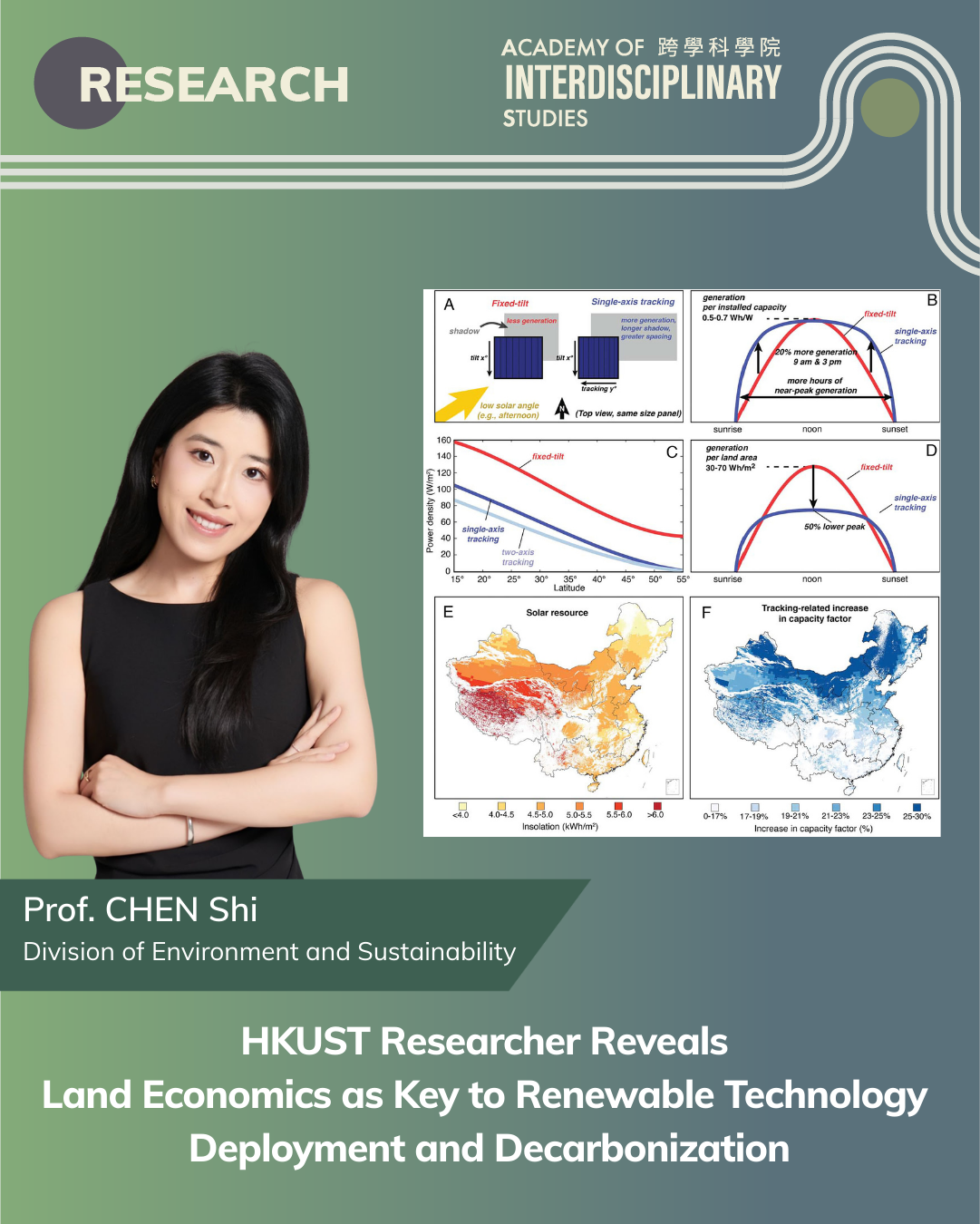
An international research team led by Prof. CHEN Shi examined the effects of land costs on the economic viability of tracking versus fixed-tilt solar technologies.
An international research team led by the Hong Kong University of Science and Technology (HKUST) has uncovered critical insights into the role of land economics in optimizing renewable technology deployment for decarbonization. This pioneering study offers a comprehensive analysis of how land costs and policy choices affect the efficacy of solar photovoltaic (PV) technologies in China.
China is at the forefront of solar PV deployment worldwide. However, the adoption of solar tracking systems remains surprisingly low at just 12%, especially when compared to the 90% adoption rate in the United States. This disparity raises important questions about the factors influencing technology choices and the broader implications for sustainable energy deployment.
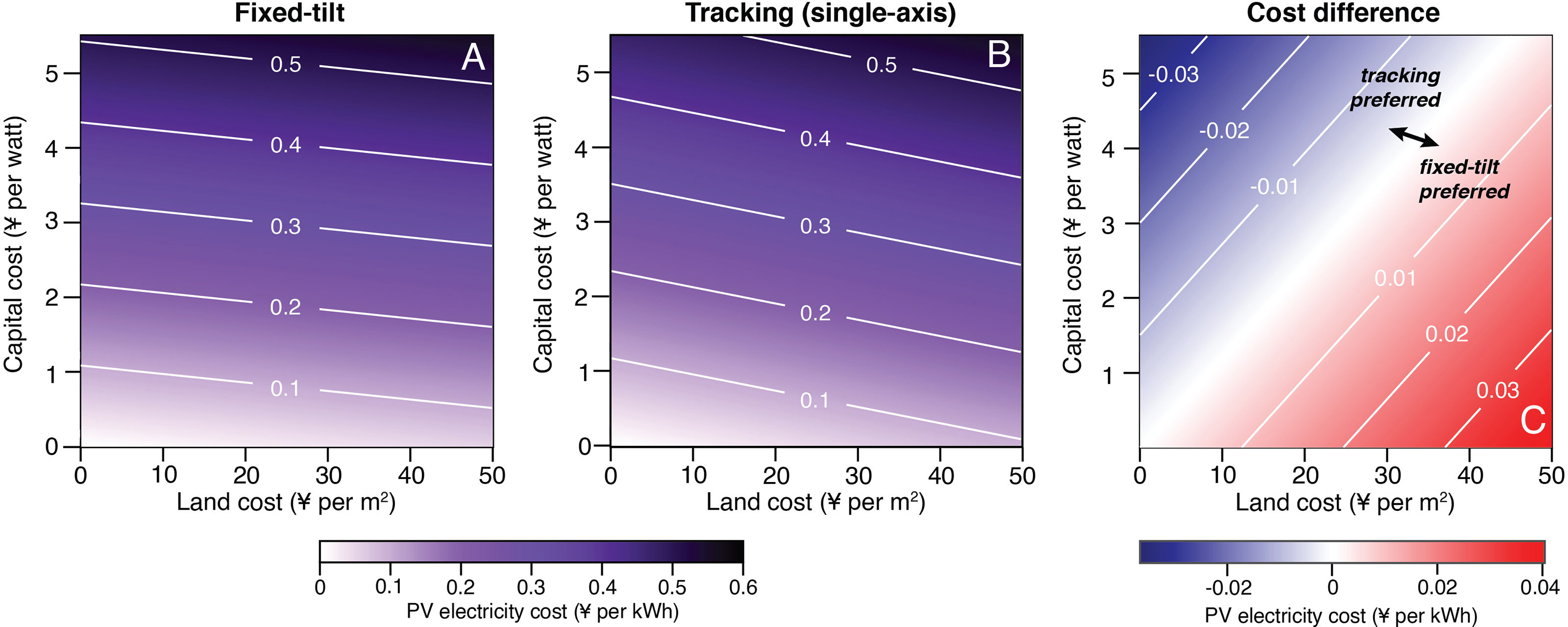
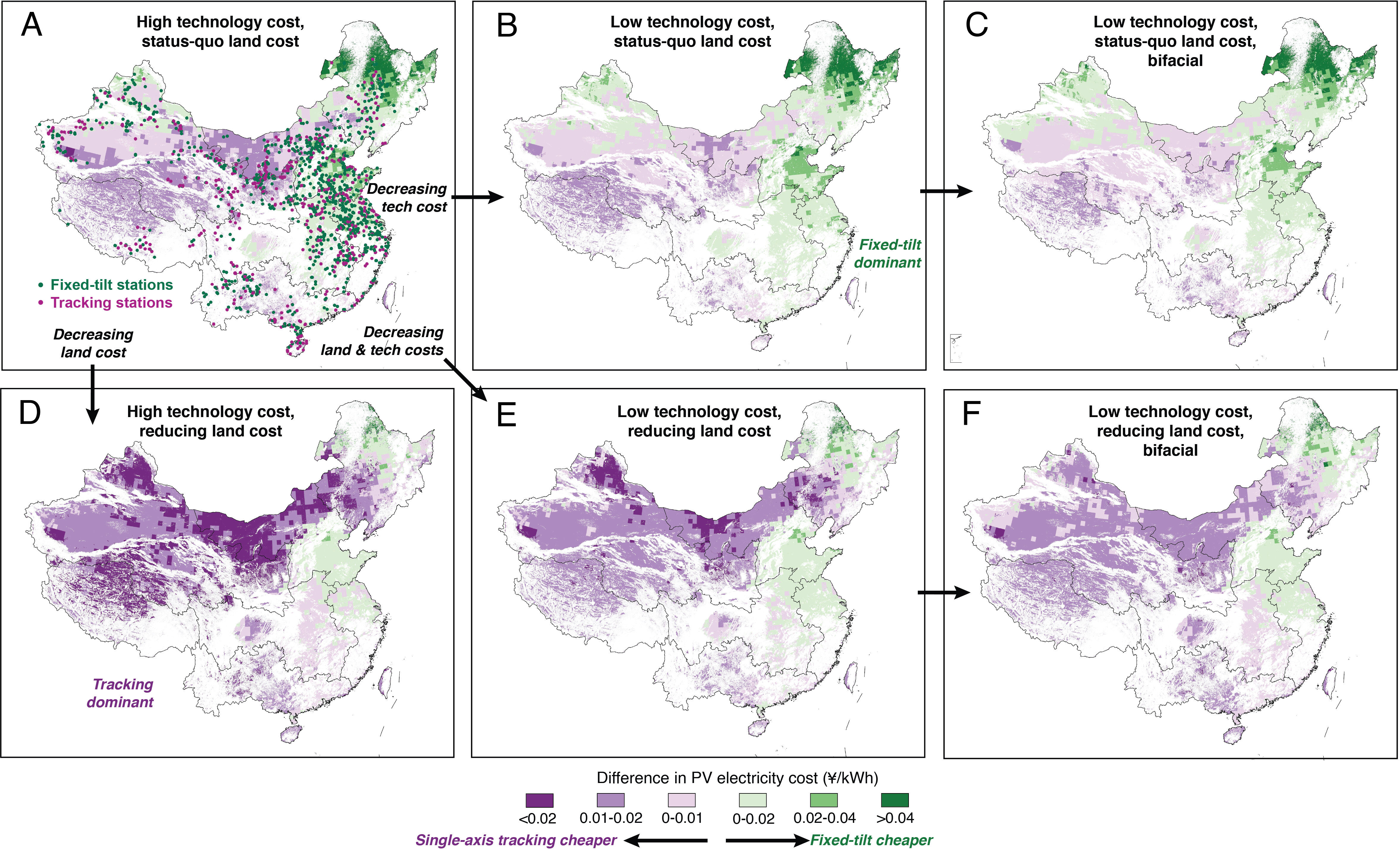
To investigate this phenomenon, a team led by Prof. CHEN Shi, Assistant Professor in the Division of Environment and Sustainability at HKUST, in collaboration with scholars from Stanford University, Carnegie Science, and Tsinghua University, examined the effects of land costs on the economic viability of tracking versus fixed-tilt solar technologies. Their findings reveal that while tracking systems can enhance energy output, they necessitate substantially larger land areas. In this sense, the study highlights that increasing land prices could inflate the levelized cost of electricity for tracking systems by 20%, whereas fixed-tilt systems see a more manageable 8% increase, thereby favoring their adoption.
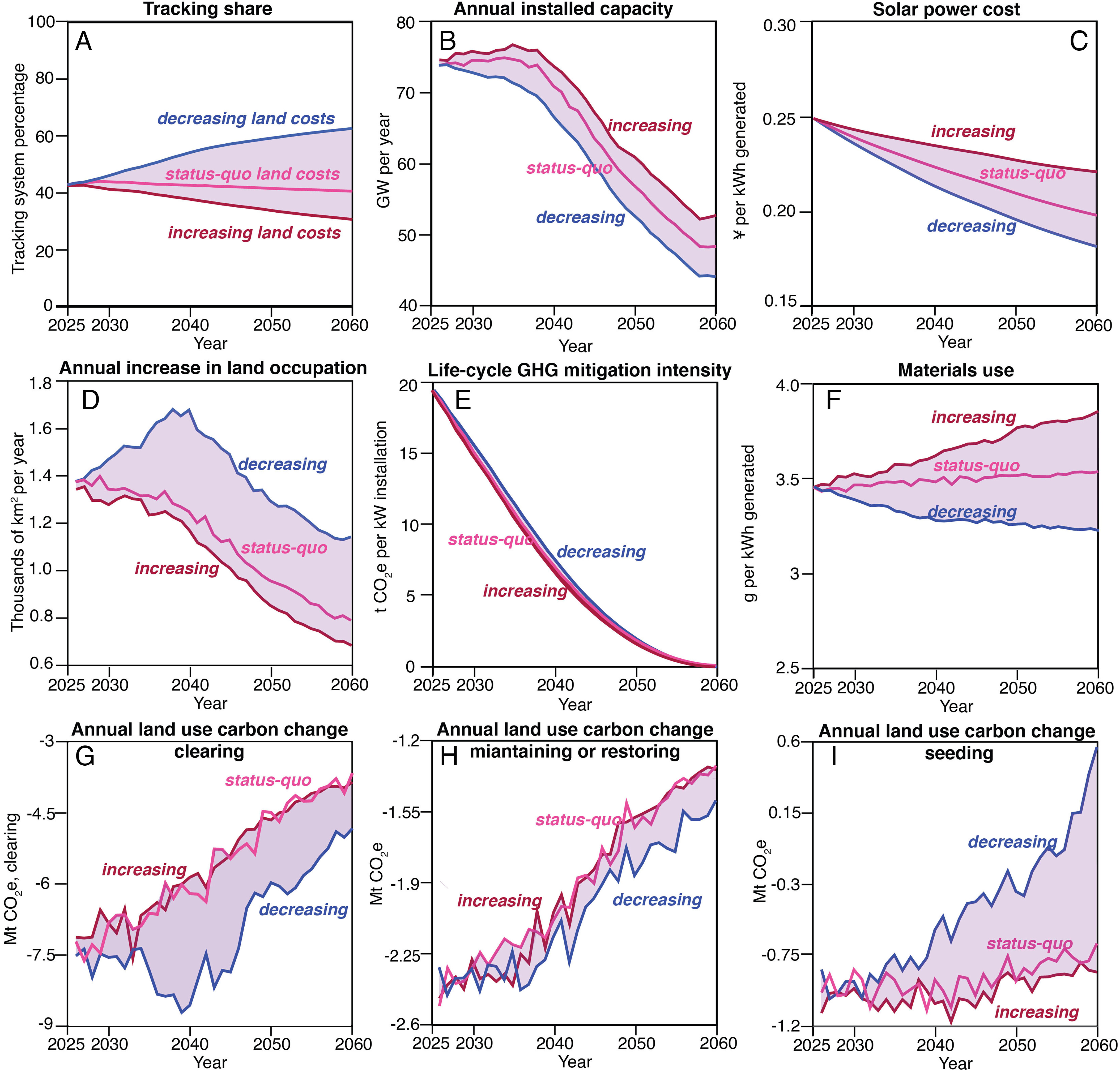
Employing an interdisciplinary modeling approach, the researchers assessed the impacts of land costs on sustainability outcomes, including carbon mitigation, material demand, and land use-related emissions, under various future land policy scenarios in China. The study found that rising land prices could steer technology choice toward the more land-efficient fixed-tilt systems. However, to meet the same electricity generation target, this shift would require a greater number of PV panels, consequently increasing material input. Conversely, lower land prices would favor the adoption of tracking technologies. While these systems need fewer panels to achieve the same electricity output, they demand a larger land area.
"Crafting effective decarbonization strategies requires a deep understanding of the economic and sustainability impacts of land use," explained Prof. Chen. "Our analysis shows that as land constraints intensify, the interplay between land use and renewable energy creates substantial and interconnected trade-offs and synergies. This makes it essential to integrate land economics into renewable energy assessments for a truly holistic view of sustainable solutions."
The research conclusions also emphasize the need for policymakers in China and beyond to consider potential trade-offs and synergies in multiple sustainability targets when setting renewable energy targets. By strategically choosing technology and establishing realistic land use policies, they could set more balanced and resilient decarbonization strategies for the regions.
The study, titled “The effect of land costs on the economic and sustainability performance of solar photovoltaics in China”, was recently published in prestigious multidisciplinary scientific journal the Proceedings of the National Academy of Sciences (PNAS) while Prof. Chen as the first and co-corresponding author.
An international research team led by Prof. CHEN Shi examined the effects of land costs on the economic viability of tracking versus fixed-tilt solar technologies.