More about HKUST


Achievements
Community
Corporate Projects
Exchange
Field Trips & Visits
Internship & Career
Undergraduate
Office
Research
Seminars & forums
Student Activities
T&M-DDP
Postgraduate
EVMT
Innovation
Entrepreneurship
Sustainability
Engineering
Environment
Air Quality
GBA
PublicPolicy
ENVR
PPOL
Teaching&Learning
Technology
Research and Technology
Greater Bay Area
IIM
Fintech
Alumni
AMC
Art Management
Artificial Intelligence
Arts
ArtTech
Cultural Studies
DesignTech
Emerging Interdisciplinary Areas
EMIA
Extended Majors
Faculty
HealthTech
IDT
ISD
Machine Creativity
MarineTech
MPM
MPP
SustainableTech
TIE
TLE
Announcements & Office
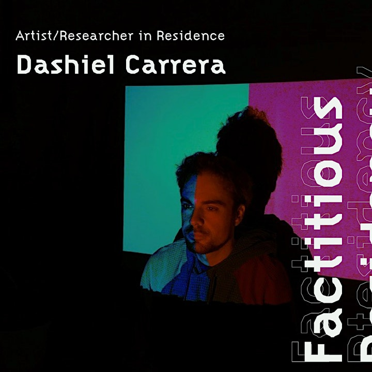
Meet Our Faculty: Prof. Dashiel CARRERA
13/11/2026
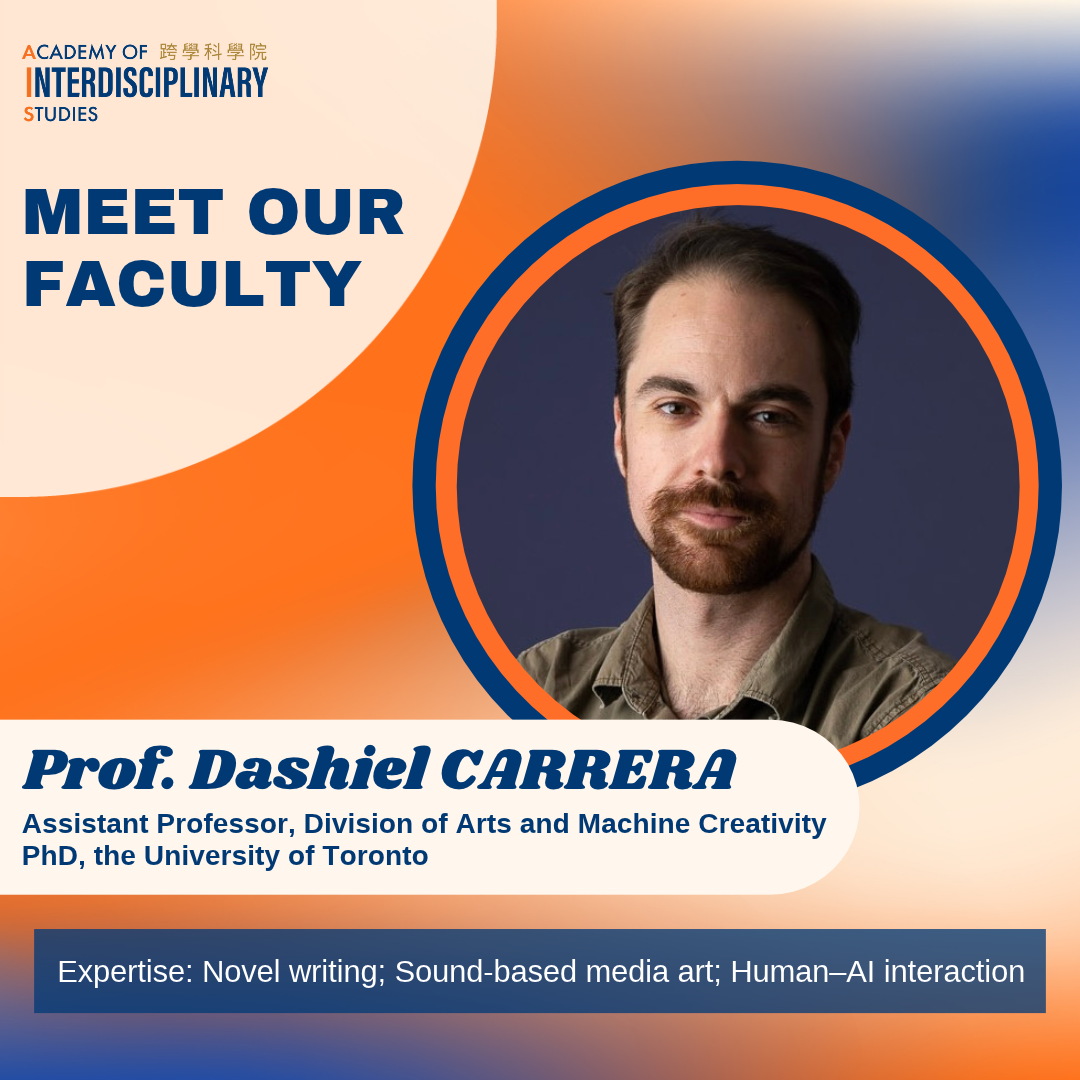
Get to know our new faculty member—Prof. Dashiel CARRERA, Assistant Professor in the Division of Arts and Machine Creativity (AMC)!
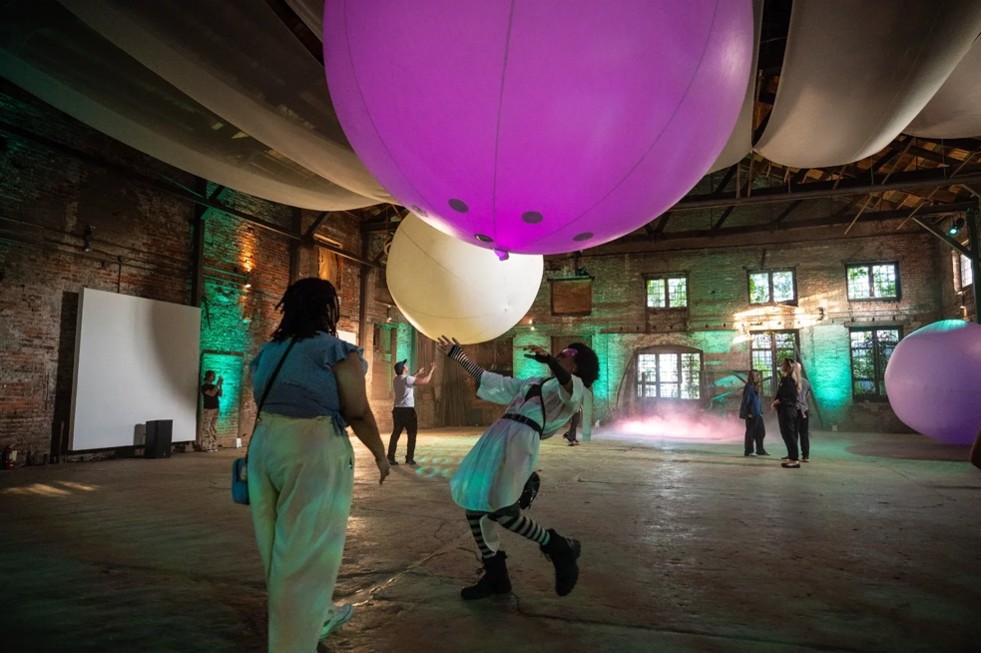
As a novelist, human-computer interaction researcher, and media artist, Prof. Carrera explores the concept of "generative uncertainty"—how destabilizing our perception through art can catalyze innovation and creative thinking.
Read on to learn more about his research, advice for students, and a fun fact about him.
-----
Could you tell us more about you?
Sure! My name is Dashiel CARRERA and I’m a novelist, human-computer interaction researcher, and media artist. I’m joining HKUST from New York City, where I spent the last year wrapping up a new novel and holding visiting positions at NYU and Columbia. My research and art practice explore what I call generative uncertainty—how destabilizing our perception via art can serve as a catalyst for innovation and creative thinking. In particular, I explore how this approach can help us better design generative AI systems and think more deeply about agency, ownership, and creative provenance. I’ll be teaching courses here on generative narrative, language, and literature.
I’ve come to HKUST because it offers an unparalleled commitment to the interdisciplinary. The Division of Arts and Machine Creativity—which brings together artists, theorists, and computer scientists—is uniquely equipped to navigate the rapidly changing landscape of the arts post-AI, and is an ideal forum for my staunchly interdisciplinary approach as an artist and researcher.
What inspired you to specialize in this line of research?
I have, since my undergraduate days, traversed the margins of the literary arts, computer science, and music, always looking for any way to make the three intermingle. I published an experimental novel called The Deer (Dalkey Archive Press) and adapted it into a sonic performance and short film with generative AI, spent time conducting HCI research at the MIT Media Lab and Harvard’s metaLab, and wrote and produced a number of indie rock records for a label in the United States.
It wasn’t until large language models were introduced to the public, however, that my line of research presented itself: to explore how to design AI to augment, rather than replace, human creativity. I knew that the world of literature would never be the same, and the firm foot I had planted in both the arts and computer science put me in a unique position to help navigate this new era.
What impact do you want your work to have on society?
In particular, I hope to enable readers, audiences, and designers of AI systems to move beyond reductive understandings of the world and see the full breadth of possibilities available to them. In the case of AI, this often means thinking critically about terminology that is used in contemporary AI discourse: agency, creativity, AI slop, etc. My hope is that AI designers and the general public will understand that the particular manner in which AI is presented is not intrinsic to the technology, so that they can imagine a version which reduces harm and helps their particular communities.
Do you have any advice for students interested in your research area?
Most students coming to design research or human-computer interaction have a well-developed aesthetic sensibility, but struggle to sharpen the argumentative building blocks of their research. Likewise, early creative writing students often come to class with ideas for stories, but without much of a sense of how to put these stories into prose.
My advice for both types of students is the same: spend more time with language. Figure out what words you like and don’t like, what kinds of papers you think are well written, and which thinkers help distill your own thoughts. Most complex ideas are formed, negotiated, revised, and sharpened as they move through iterations of language. Without reading, thinking carefully about word choice, and—crucially—revising, it is difficult to develop your craft.
Could you share a fun fact about you?
As a teenager, I shattered my left femur while skateboarding and wound up in the hospital. A very clever surgeon realized that if he inserted a metal rod between the bone fragments, he could send me home without a cast. It’s still in there!