More about HKUST


Achievements
Community
Corporate Projects
Exchange
Field Trips & Visits
Internship & Career
Undergraduate
Office
Research
Seminars & forums
Student Activities
T&M-DDP
Postgraduate
EVMT
Innovation
Entrepreneurship
Sustainability
Engineering
Environment
Air Quality
GBA
PublicPolicy
ENVR
PPOL
Teaching&Learning
Technology
Research and Technology
Greater Bay Area
IIM
Fintech
Alumni
AMC
Art Management
Artificial Intelligence
Arts
ArtTech
Cultural Studies
DesignTech
Emerging Interdisciplinary Areas
EMIA
Extended Majors
Faculty
HealthTech
IDT
ISD
Machine Creativity
MarineTech
MPM
MPP
SustainableTech
TIE
TLE
Research and Innovation
HKUST Releases First Batch of Hong Kong Images Captured by "MUSICO" in Celebration of 77th Anniversary of Founding of the People's Republic of China
02/10/2026
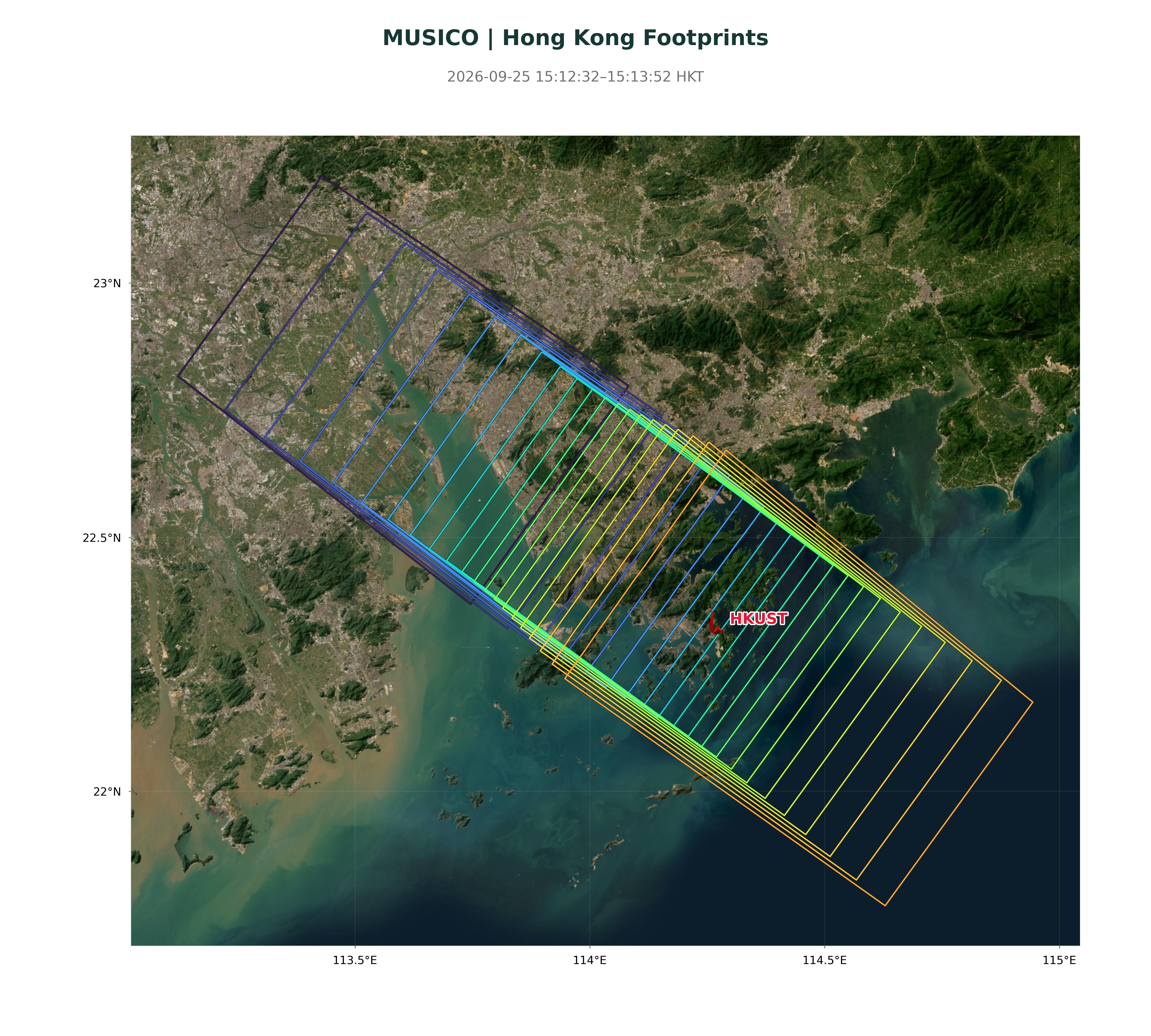
The Hong Kong University of Science and Technology (HKUST) today released the first batch of Hong Kong remote sensing images captured by the Multi‑Spectral Imaging Carbon Observatory (MUSICO), showcasing a major achievement by Hong Kong researchers participating in the nation’s space program while celebrating the 77th anniversary of the founding of the People’s Republic of China.
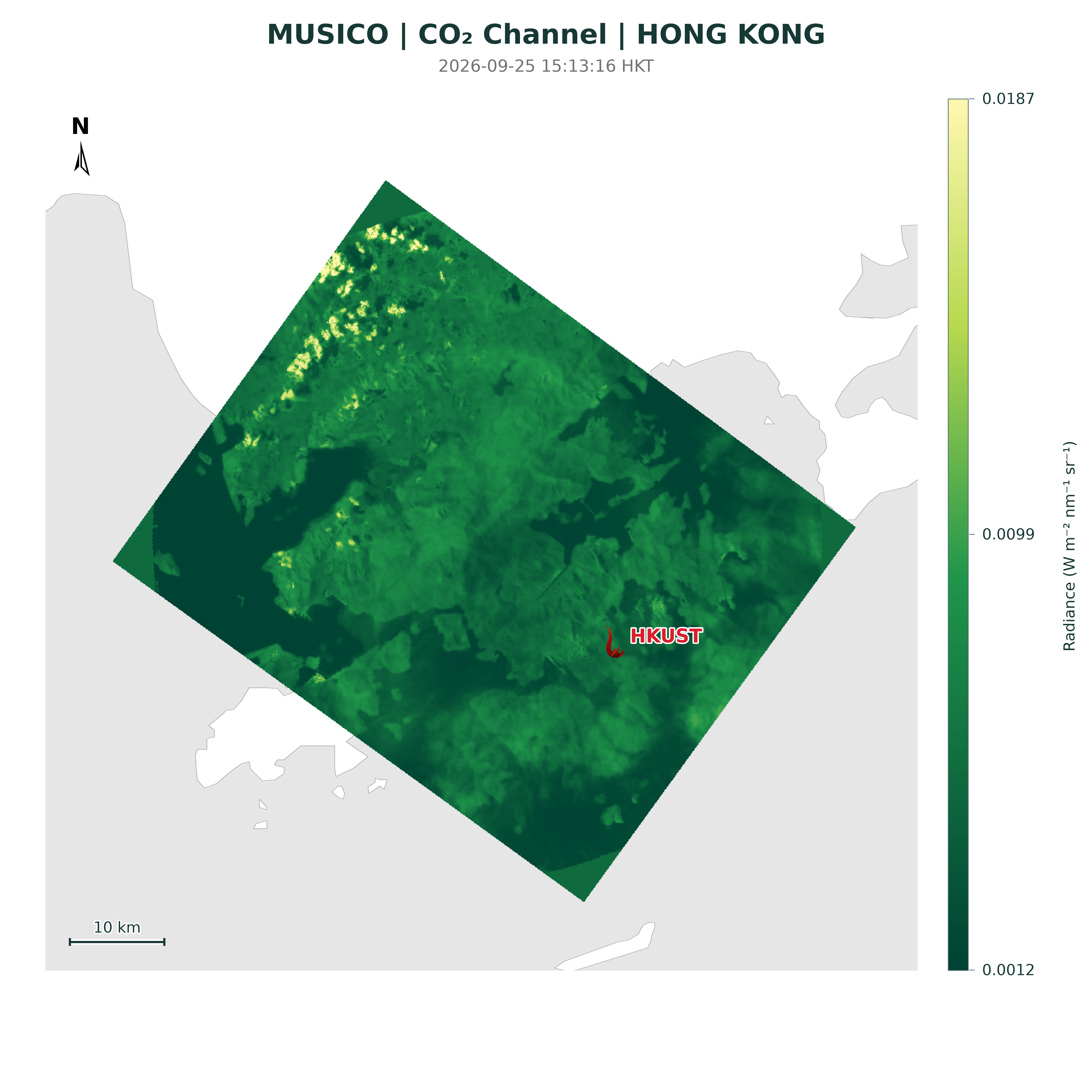
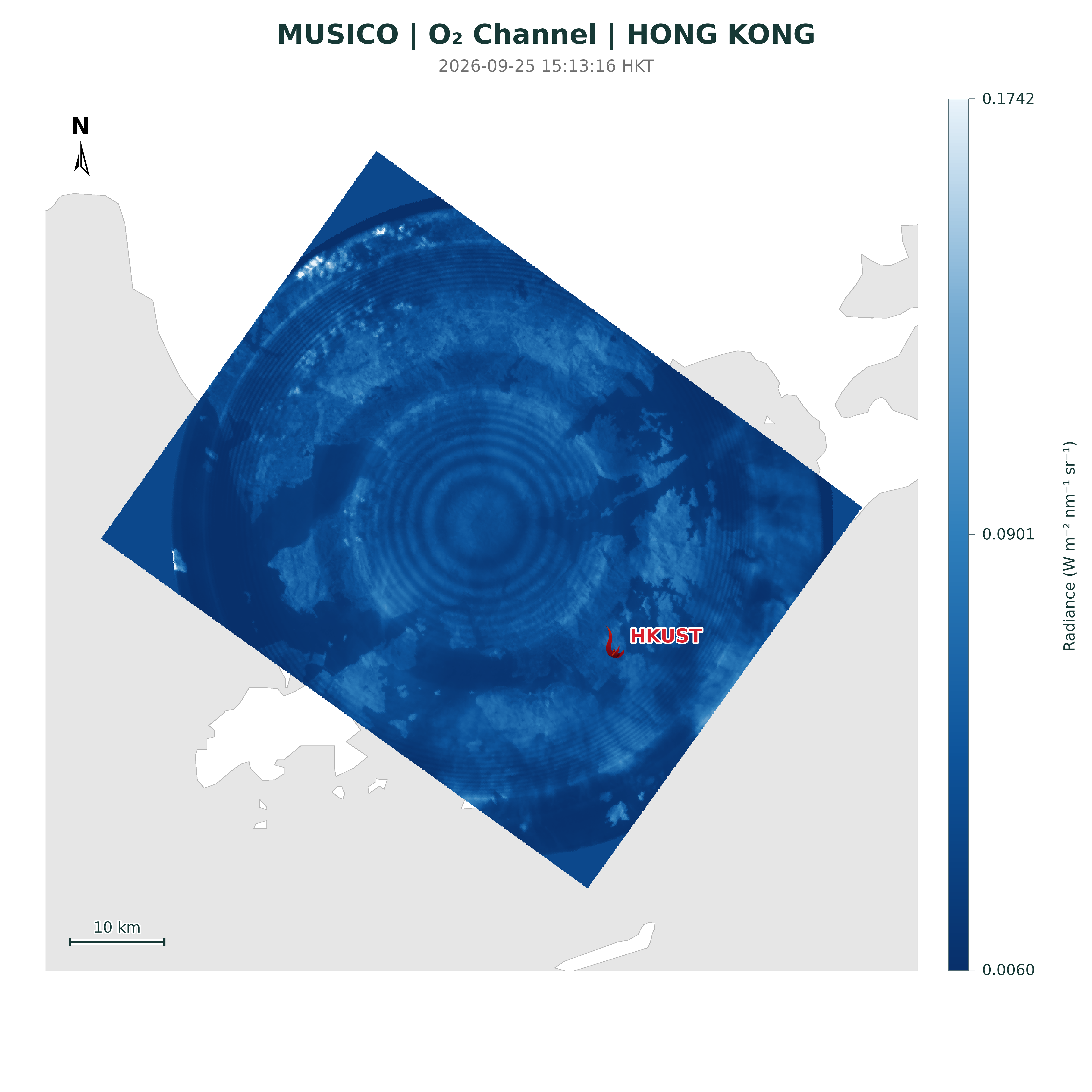
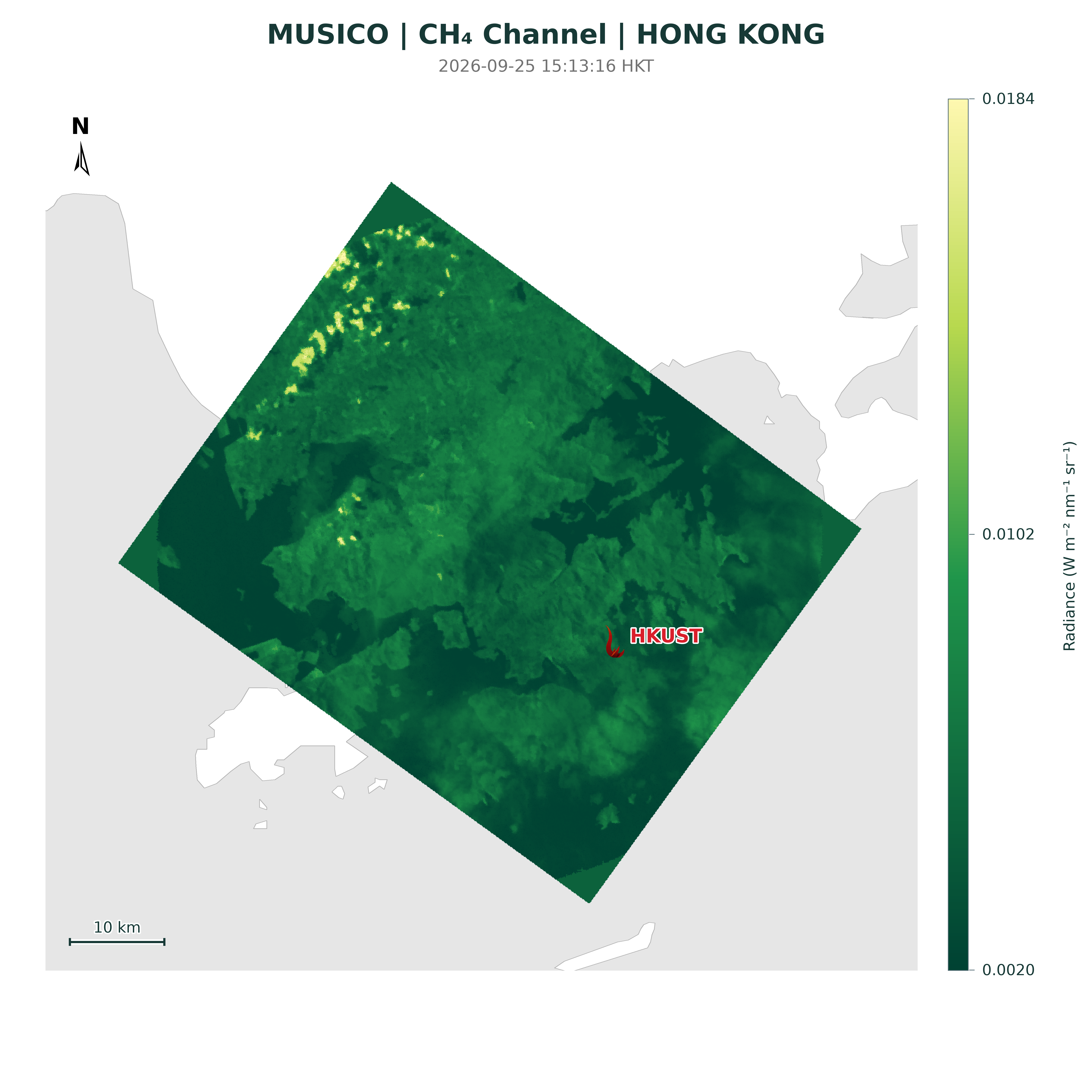
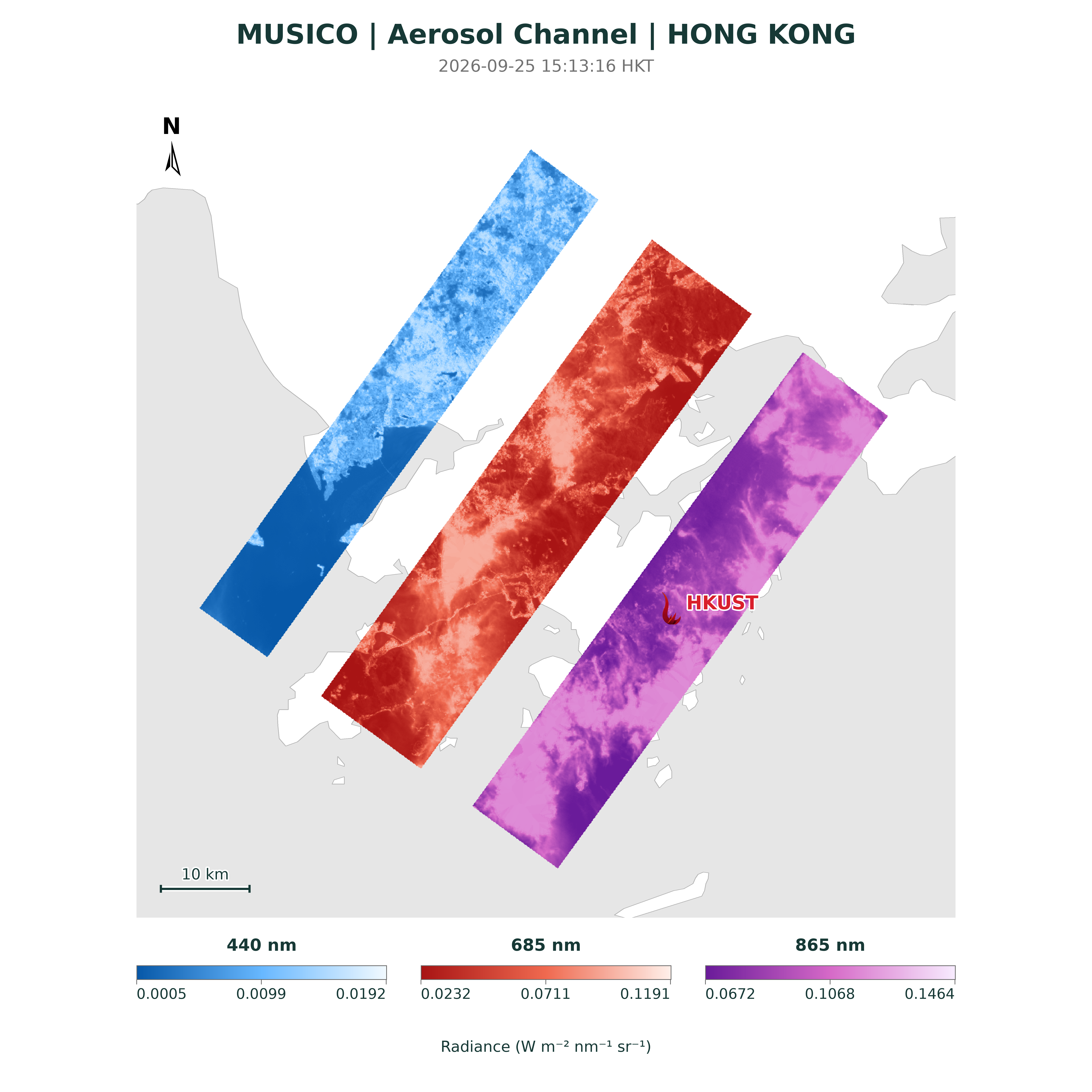
Led by HKUST, MUSICO is the world’s first lightweight, high‑resolution, high‑precision synergistic observatory for carbon dioxide and methane emission point sources. The instrument has been carrying out scientific missions aboard the Tiangong Space Station for more than three months, during which it successfully completed a series of system tests, calibrations, and on-orbit validation activities. The Hong Kong images and videos released today were acquired through MUSICO’s four optical sensors, including gas-detection spectrometers for carbon dioxide, methane, and oxygen, as well as an aerosol observation radiometer. The data clearly reveal the geographical features of Hong Kong and its surrounding areas. Despite travelling at approximately 7.7 kilometers per second in orbit aboard the space station, MUSICO has consistently acquired high-quality remote sensing data with a spatial resolution of approximately 100 meters, demonstrating its outstanding imaging capability. The project team has now completed the instrument’s major on-orbit testing and calibration work, allowing MUSICO to enter its routine scientific operation phase.
Prof. ZHANG Limin, Head of the Department of Civil and Environmental Engineering at HKUST said, “The release of the first images of Hong Kong captured by MUSICO on the eve of National Day carries special significance for our team and serves as a special gift to our country and our city. It not only marks the successful deployment of a Hong Kong-developed scientific payload aboard the Tiangong Space Station, but also demonstrates Hong Kong’s growing contribution to the nation’s space endeavors. We feel deeply honored to observe Hong Kong from space and measure greenhouse gas concentrations above our city. This milestone also reinforces the important role that scientific research can play in serving national development and addressing societal needs.”
Prof. SU Hui, Chair Professor of the Department of Civil and Environmental Engineering and Director of the Space Science and Technology Institute at HKUST said, “Since Dr. LAI Ka-Ying and fellow crew members successfully installed and activated MUSICO aboard the Tiangong Space Station, we have been carrying out instrument calibration, validation, and data analysis on a continuous basis. Over the past few months, MUSICO has acquired data over more than 450 target regions worldwide, generating a total of 4.3 TB of observations. Due to persistent cloud cover and rainy weather across Hong Kong and South China during the summer months, obtaining high-quality imagery of Hong Kong has not been easy. Fortunately, favorable weather conditions ahead of National Day allowed us to observe Hong Kong through MUSICO. When the first set of clear images of Hong Kong was transmitted from the Tiangong Space Station back to Earth, the entire team was thrilled and deeply encouraged. As a scientific payload developed in Hong Kong, MUSICO serves as an ‘Eye for Space’ watching over our city and contributing Hong Kong’s strengths to national and global efforts in climate governance.”
Prof. ZHAI Chengxing, Associate Professor of the Division of Emerging Interdisciplinary Areas at HKUST, said, “Obtaining images is only the first step. More importantly, we aim to derive quantitative information on greenhouse gas concentration distributions from the observations. The team is currently carrying out data processing, calibration, correction, and retrieval analyses based on the measurements acquired by MUSICO. We are also collaborating with national and international research institutions to validate the accuracy of our carbon dioxide and methane retrieval products. The instrument continues to transmit observational data on a daily basis, and the images released today represent processed Level-1 data products. As we further refine our algorithms, additional scientific results will be released in the future to support global greenhouse gas monitoring and climate change research.”
The MUSICO project is jointly led by Prof. Su Hui, Prof. Zhang Limin and Prof. Zhai Chengxing. Since MUSICO was deployed aboard the Tiangong Space Station, the team has been working closely with the Changchun Institute of Optics, Fine Mechanics and Physics, Chinese Academy of Sciences, and the Technology and Engineering Center for Space Utilization of the Chinese Academy of Sciences, to perform on-orbit operations, instrument calibration, and data processing activities.