More about HKUST


Achievements
Community
Corporate Projects
Exchange
Field Trips & Visits
Internship & Career
Undergraduate
Office
Research
Seminars & forums
Student Activities
T&M-DDP
Postgraduate
EVMT
Innovation
Entrepreneurship
Sustainability
Engineering
Environment
Air Quality
GBA
PublicPolicy
ENVR
PPOL
Teaching&Learning
Technology
Research and Technology
Greater Bay Area
IIM
Fintech
Alumni
AMC
Art Management
Artificial Intelligence
Arts
ArtTech
Cultural Studies
DesignTech
Emerging Interdisciplinary Areas
EMIA
Extended Majors
Faculty
HealthTech
IDT
ISD
Machine Creativity
MarineTech
MPM
MPP
SustainableTech
TIE
TLE
Research and Innovation
World’s First Lightweight High Resolution High Precision CO₂ and CH₄ Point Source Detector “MUSICO” Arrives at Tiangong Space Station via Tianzhou-10: HKUST Led Project Marks Hong Kong’s First Scientific Payload on the National Space Station
14/05/2026
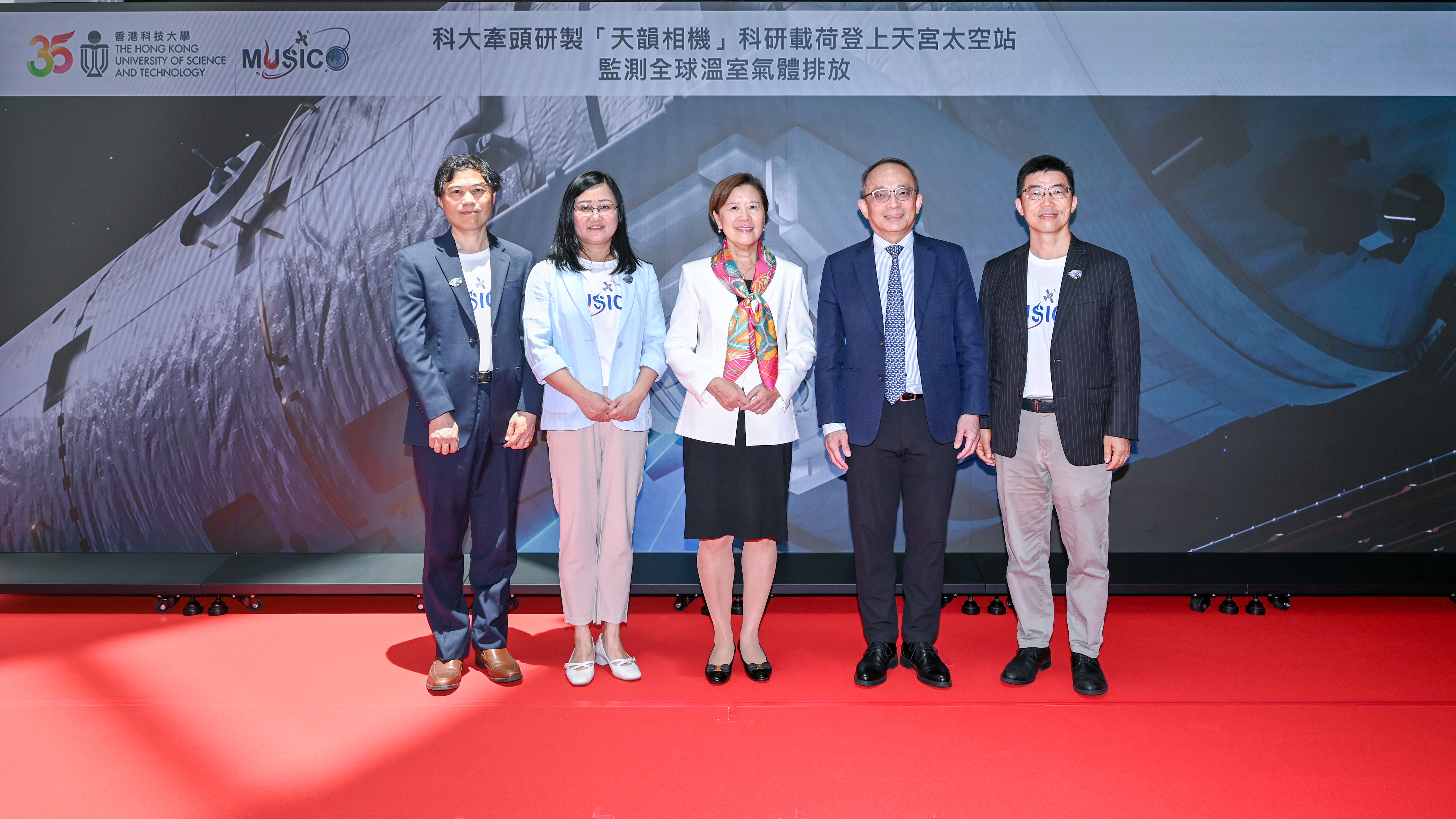
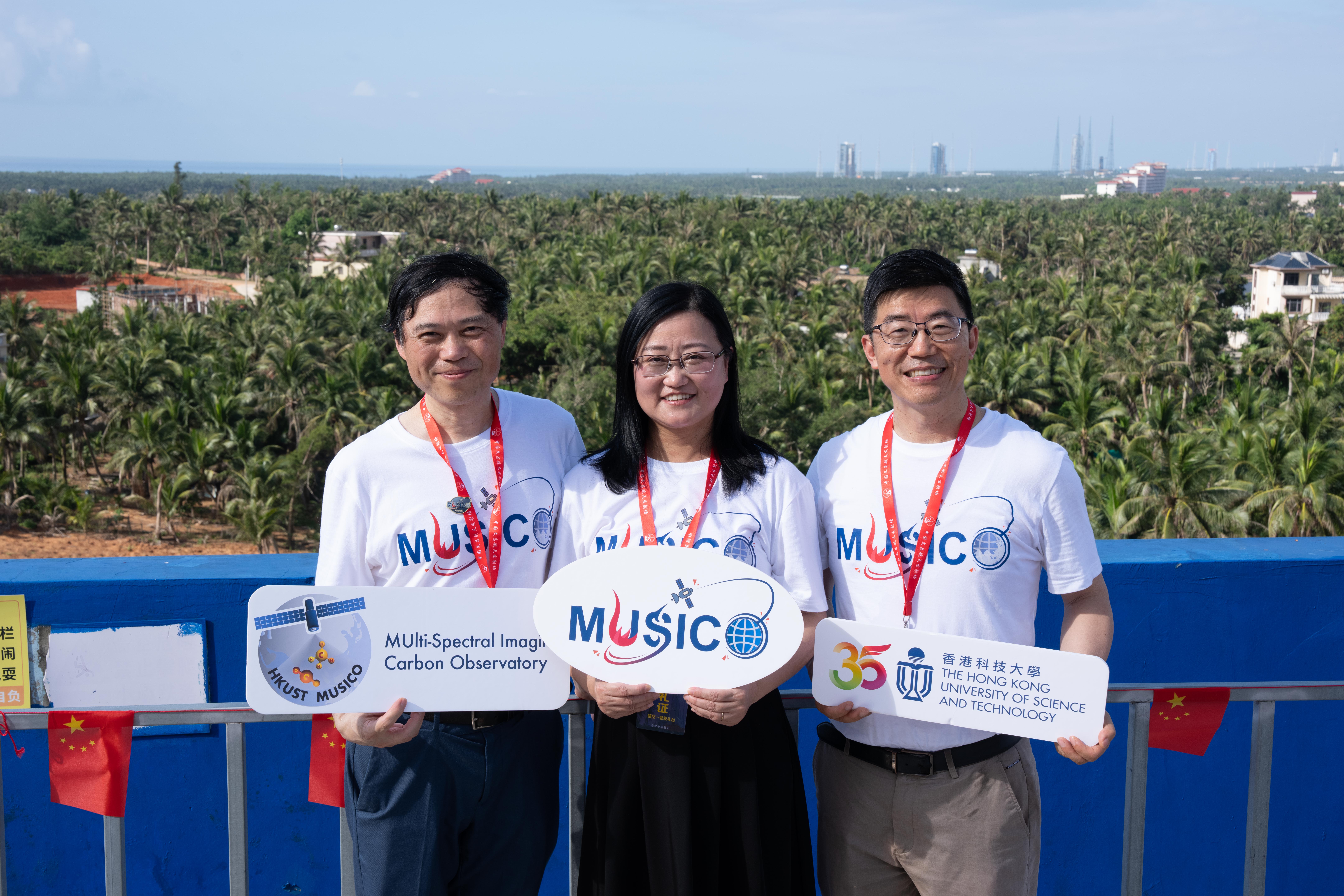
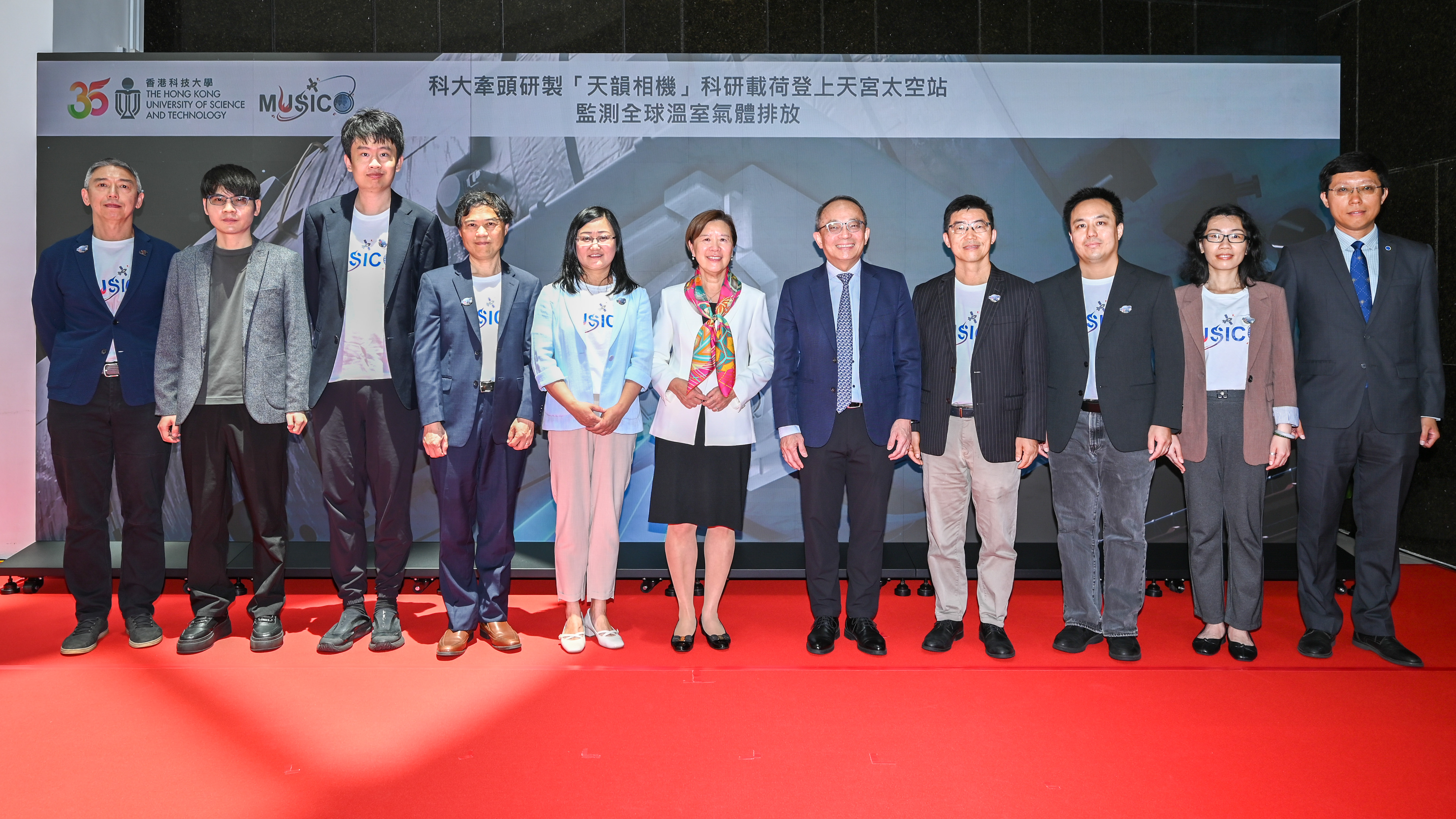
Led by HKUST, the world’s first lightweight, high-resolution, high-precision synergistic observatory for carbon dioxide (CO₂) and methane (CH₄) emission point sources—named “MUSICO” (Multi Spectral Imaging Carbon Observatory)—was successfully launched aboard the Tianzhou-10 cargo spacecraft on May 11 and has since arrived at China’s Tiangong Space Station. Prof. Nancy IP (center), HKUST President; together with Prof. Tim CHENG Kwang-Ting (second right), HKUST Vice‑President for Research and Development; pose for a group photo with three core members of the project: Prof. SU Hui (second left), Chair Professor in the Department of Civil and Environmental Engineering and Global STEM Professor at HKUST; Prof. ZHANG Limin (first right), Chair Professor and Head of the same department; and Prof. ZHAI Chengxing (first left), Associate Professor in the Division of Emerging Interdisciplinary Areas.
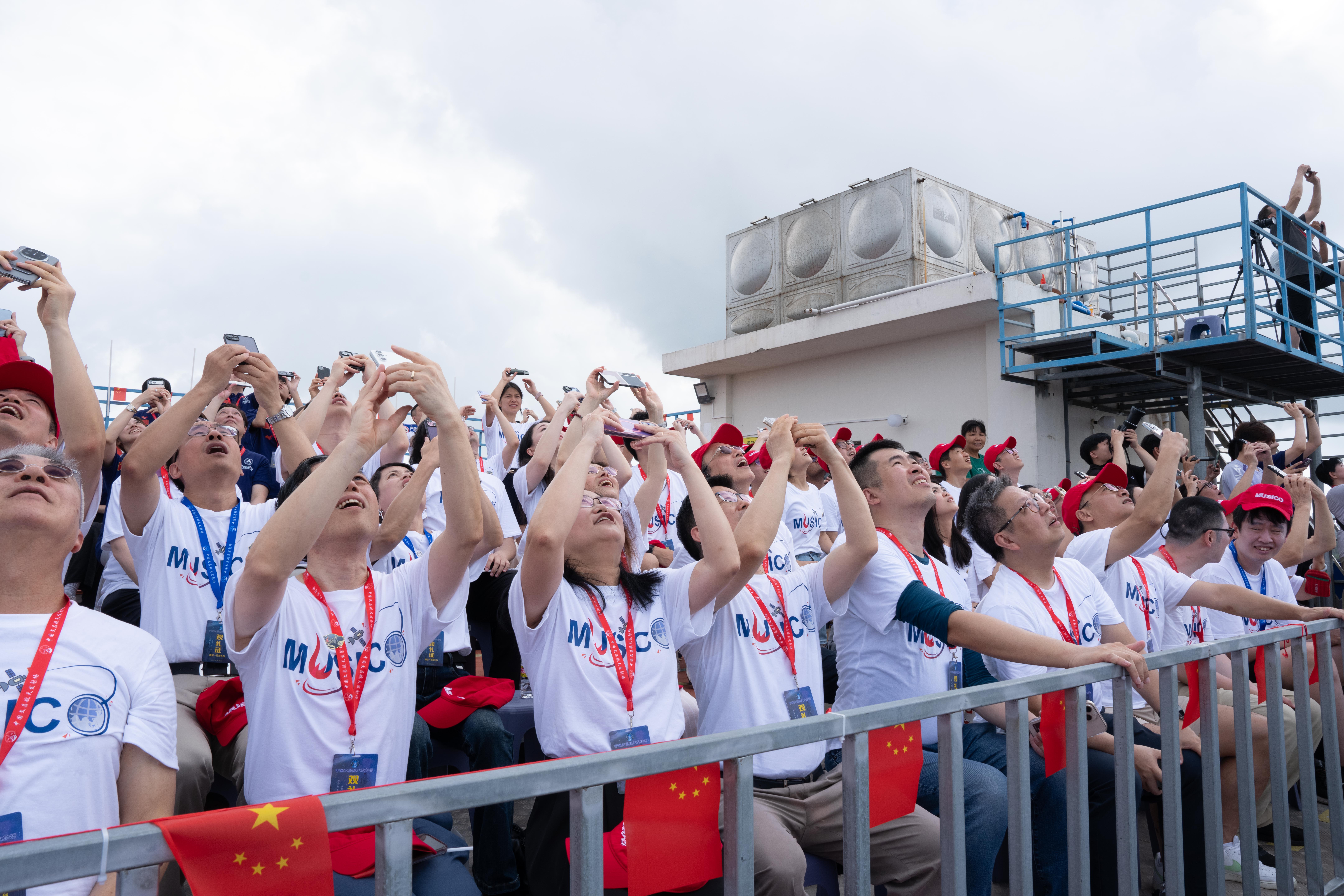
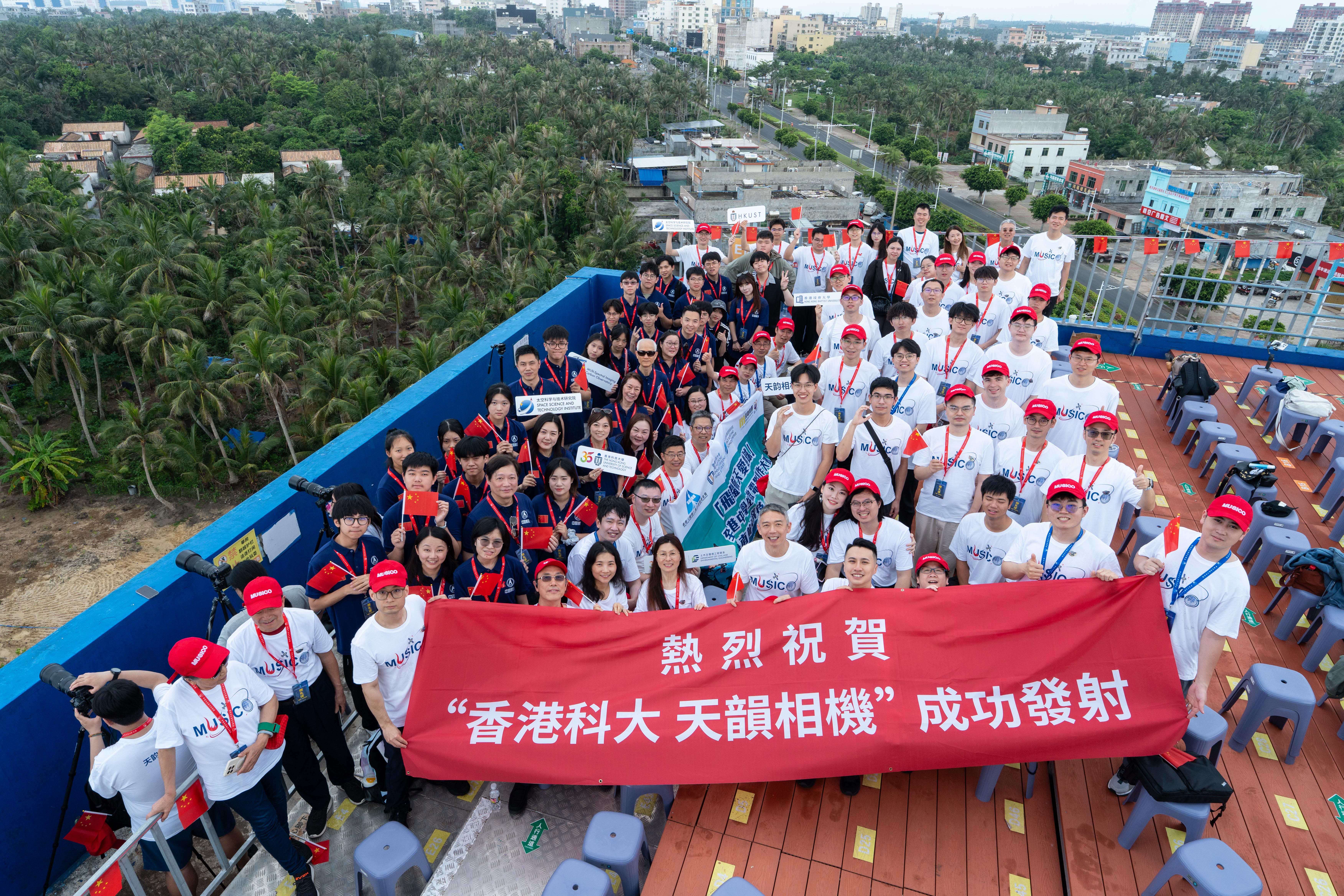
The world’s first lightweight, high‑resolution, high‑precision synergistic observatory for carbon dioxide (CO₂) and methane (CH₄) emission point sources – named “MUSICO”, Multi‑Spectral Imaging Carbon Observatory, led by The Hong Kong University of Science and Technology (HKUST) – was successfully launched aboard the Tianzhou‑10 cargo spacecraft on May 11 and has arrived at China’s Tiangong Space Station. This is not only Hong Kong’s first scientific payload deployed on the national space station, but also a historic breakthrough for the city in the development of high‑end aerospace instruments. The project fully demonstrates Hong Kong’s strong capability to build national‑level cutting-edge scientific payloads, to participate in long‑term space station missions, and to play a key role in addressing global climate change while serving the nation’s strategic “carbon peak and carbon neutrality” goals.
The project is led by an interdisciplinary research team from HKUST, comprising experts from the Department of Civil and Environmental Engineering, the Division of Emerging Interdisciplinary Areas, the Division of Environment and Sustainability, the Department of Computer Science and Engineering, and the Division of Public Policy. In late 2024, the project received formal approval from the Technology and Engineering Center for Space Utilization of the Chinese Academy of Sciences (CSU.CAS), the general research center for the Space Utilization System. It is jointly developed with the CAS Changchun Institute of Optics, Fine Mechanics and Physics, and funded by the Special Call (Aerospace Technology) of the Innovation and Technology Support Program under the Innovation and Technology Commission of the HKSAR Government.
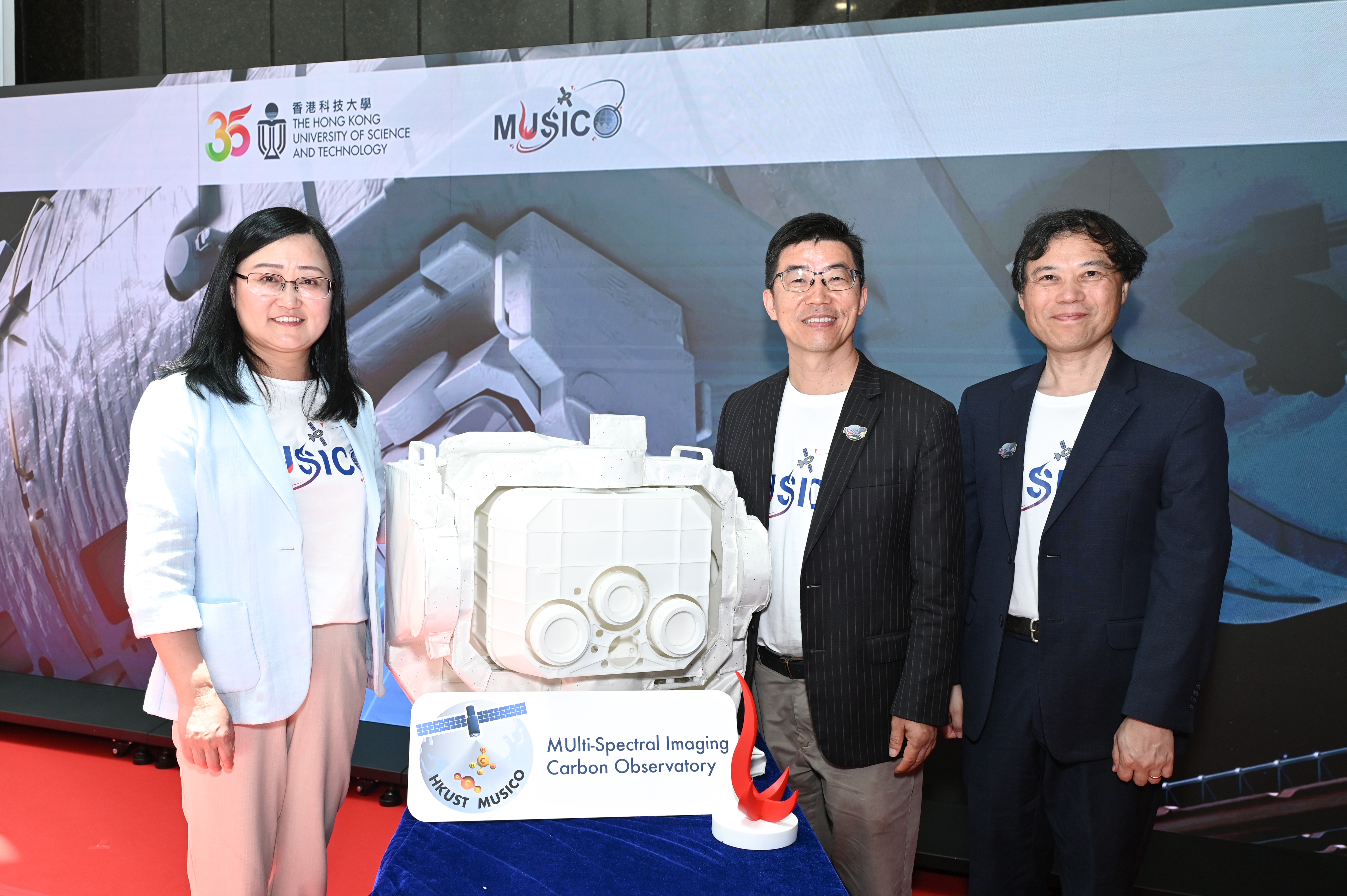
MUSICO is a lightweight, high‑resolution, high‑precision greenhouse gas point‑source detection payload capable of accurately measuring CO₂ and CH₄ — two major greenhouse gases — from space. Smaller than a domestic washing machine, the instrument maintains extra-high spectral resolution and one hundred‑meter spatial resolution. By analyzing intensity changes of sunlight over specific spectral bands as it passes through the atmosphere and reflects off the Earth’s surface, MUSICO identifies gas‑specific absorption features to determine gas concentrations and pinpoint individual emission sources, enabling effective monitoring of key facilities such as power plants and landfills.
Prof. SUN Dong, Secretary for Innovation, Technology and Industry of the HKSAR Government, remarked, “This HKUST led project represents Hong Kong’s first scientific payload aboard the Tiangong Space Station, a major milestone for Hong Kong in the nation’s space missions. The national 15th Five Year Plan identifies accelerating green and low carbon transition, building a space powerhouse, and achieving carbon peak as key priorities. The successful deployment of a payload autonomously developed by a Hong Kong research team on Tiangong powerfully demonstrates that Hong Kong scientists possess top tier research and technology translation capabilities in frontier fields such as aerospace technology and green low carbon science, providing the nation with high quality, verifiable scientific data to accelerate the realization of the dual carbon goals.”
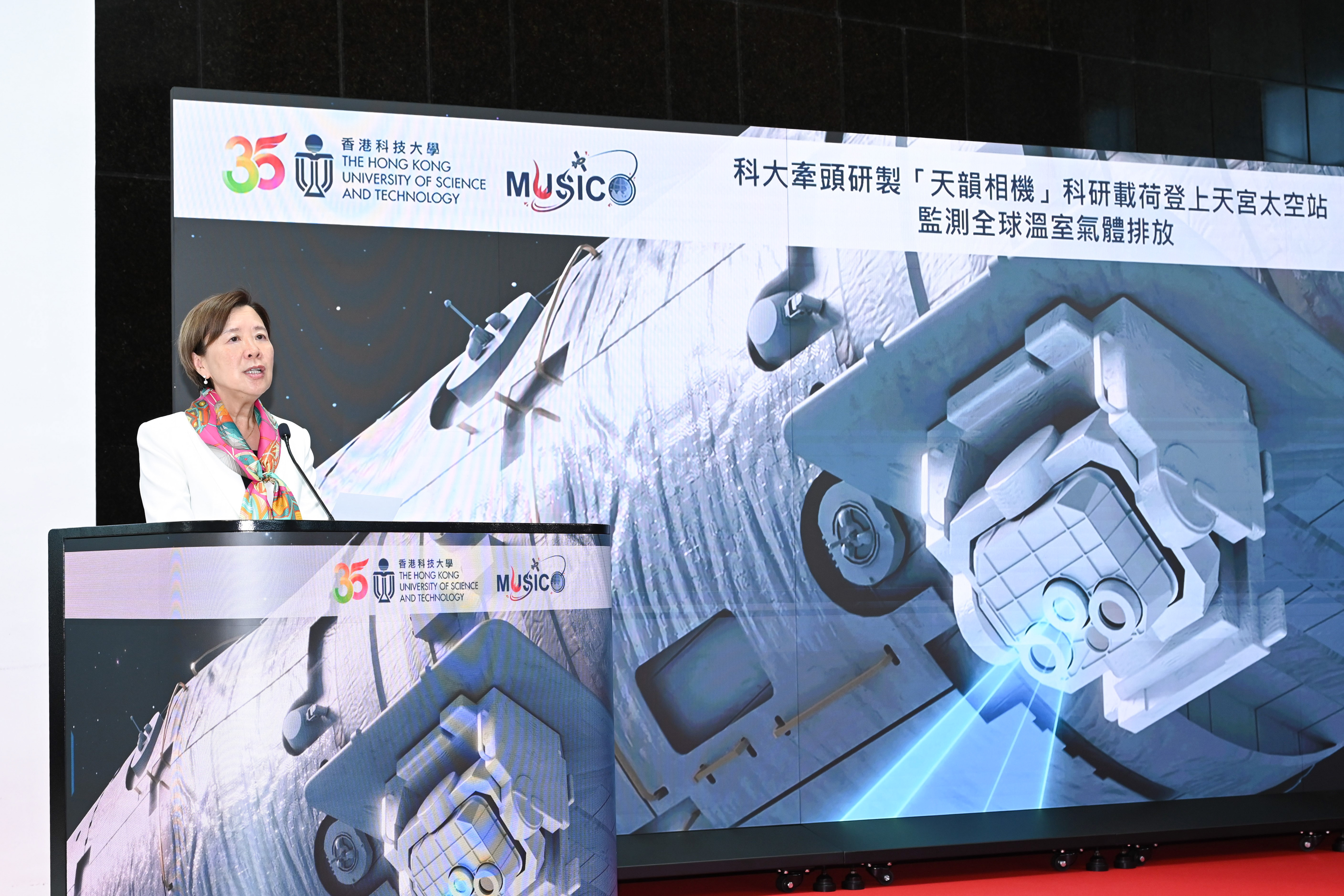
Prof. Nancy IP, President of HKUST, said, “We are deeply honored that our HKUST research team can participate in scientific missions on the national space station, and we sincerely thank the nation and the HKSAR Government for their long‑standing trust and support. This project not only highlights HKUST’s accumulated strengths in aerospace engineering, satellite remote sensing, and environmental engineering, but also proves that Hong Kong’s research capabilities can make substantial contributions on the nation’s highest‑level aerospace platforms. As the world’s first lightweight high‑precision greenhouse gas point‑source detection payload, MUSICO will continue to operate on the national space station, providing autonomous, controllable, high‑reliability CO₂ and CH₄ emission monitoring data that directly support the nation’s dual‑carbon goals and provide scientific backing for the ‘Beautiful China’ initiative and global climate governance.”
President Ip added, “In recent years, HKUST has been deepening its efforts in deep‑space exploration and low‑orbit satellite technology — following the successful launch of Hong Kong’s first higher‑education satellite in 2023, we are now actively participating in the nation’s Chang’e‑8 lunar exploration mission. Looking ahead, HKUST will continue to leverage its strengths in artificial intelligence, robotics, and materials science to accelerate the translation of space‑related technologies and nurture high‑end talent, contributing to the nation’s accelerated drive to build a space powerhouse and achieve green, low‑carbon, high‑quality development.”
Prof. SU Hui, Project Lead, Chair Professor of the Department of Civil and Environmental Engineering and Global STEM Professor at HKUST, said, “The development of MUSICO involved overcoming multiple critical technical challenges — namely, how to achieve high spectral resolution, fine spatial resolution, and synergistic multi‑gas observation under strict size and weight constraints. The team conducted extensive testing and optimization in optical design, precision manufacturing, and system integration to ensure the instrument can deliver reliable, accurate greenhouse gas data over long periods under high‑speed operation and extreme space environments. Successfully integrating these key technologies into a lightweight payload represents a landmark engineering and scientific achievement, demonstrating that the technology has reached internationally advanced standards.”
Prof. ZHANG Limin, Co‑Project Lead, National Engineer Awardee and Head of the Department of Civil and Environmental Engineering at HKUST, emphasized, “MUSICO’s observational coverage spans most land and ocean areas across low‑to‑mid‑latitude regions, providing consistent and comparable greenhouse gas monitoring data for different regions. The project’s results will be shared with government agencies and research institutions, supporting scientific research and practical applications in the Guangdong‑Hong Kong‑Macao Greater Bay Area and in other parts of China. They will also provide a scientific basis for cross‑regional climate research and emission reduction efforts along the Belt and Road, contributing to the global response to climate change. This is both a vivid example of HKUST’s research strength serving national strategy and a concrete practice of Hong Kong’s research capabilities contributing to global climate governance.”
The research project is co‑led by Prof. SU Hui, Chair Professor of the Department of Civil and Environmental Engineering and Global STEM Professor at HKUST, and Prof. ZHANG Limin, Chair Professor and Head of the same department. Prof. ZHAI Chengxing, Associate Professor of the Division of Emerging Interdisciplinary Areas serves as the mission system engineer. Other team members include: Senior Scientific Officer Dr. RONG Pingping, Prof. ZHANG Jize, and Prof. WANG Zhe from HKUST’s Department of Civil and Environmental Engineering; Prof. NING Zhi, Prof. SHI Xiaoming, and Prof. GU Dasa from the Division of Environment and Sustainability; Prof. MA Xiaojuan from the Department of Computer Science and Engineering; Prof. ZHU Pengyu from the Division of Public Policy; Prof. GAO Meng from Hong Kong Baptist University; and Prof. LI Jia from Lingnan University.
The project has also garnered strong industry support, including funding from HKUST-incubated startup Stellerus Technology Limited. Meanwhile, CLP Power Hong Kong Limited will collaborate with the project team to explore leveraging the data collected by MUSICO to complement its relevant assessments.
Media Coverage:
神二十三任務標識現紫荊花圖案 港產太空人最快年內操作港產「測碳天眼」 研製團隊今展示模型
文匯網 – https://www.wenweipo.com/a/202605/13/AP6a03916ae4b0b49ad1baac4a.html
大公文匯網 – https://www.tkww.hk/epaper/view/newsDetail/2054254048676286464.html
Led by HKUST, the world’s first lightweight, high-resolution, high-precision synergistic observatory for carbon dioxide (CO₂) and methane (CH₄) emission point sources—named “MUSICO” (Multi Spectral Imaging Carbon Observatory)—was successfully launched aboard the Tianzhou-10 cargo spacecraft on May 11 and has since arrived at China’s Tiangong Space Station. Prof. Nancy IP (center), HKUST President; together with Prof. Tim CHENG Kwang-Ting (second right), HKUST Vice‑President for Research and Development; pose for a group photo with three core members of the project: Prof. SU Hui (second left), Chair Professor in the Department of Civil and Environmental Engineering and Global STEM Professor at HKUST; Prof. ZHANG Limin (first right), Chair Professor and Head of the same department; and Prof. ZHAI Chengxing (first left), Associate Professor in the Division of Emerging Interdisciplinary Areas.